Goals

For a long time, I avoided setting long-term goals. Falling short of some over the decades – make the basketball team, gain the job promotion – devastated me. My painful reaction made goal-setting seem a vulnerability that was not worth the risk.

This did not include goals I considered minor (beating deadline) or subjective (being a good dad). I almost always achieved those. But no major, objectively measurable, Yoda goals: “Do or do not. There is no try.”

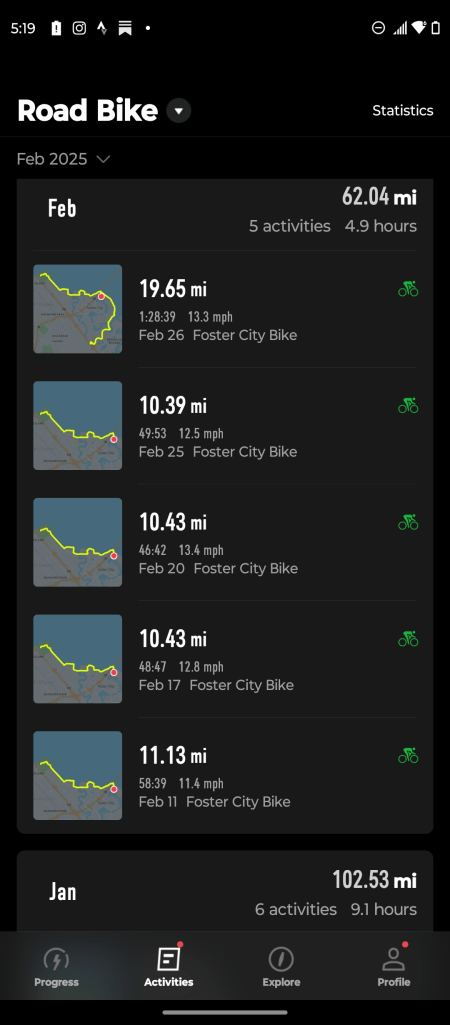
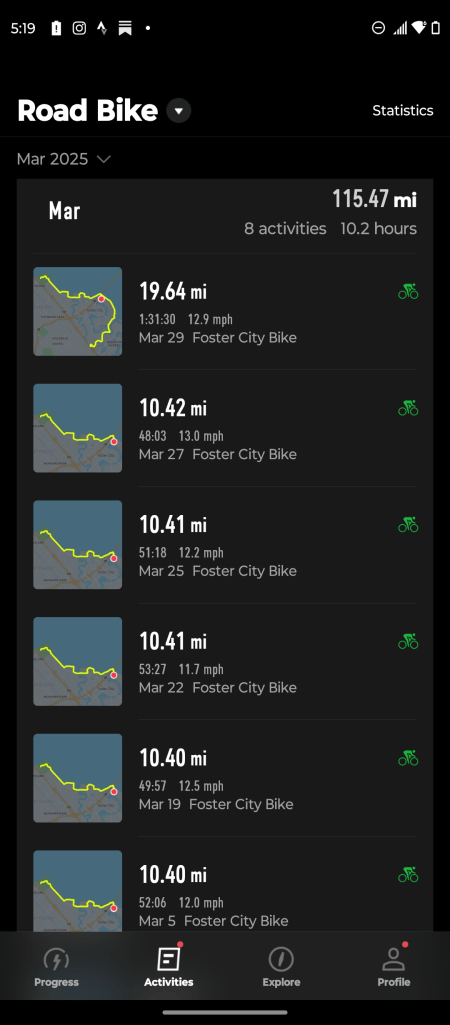
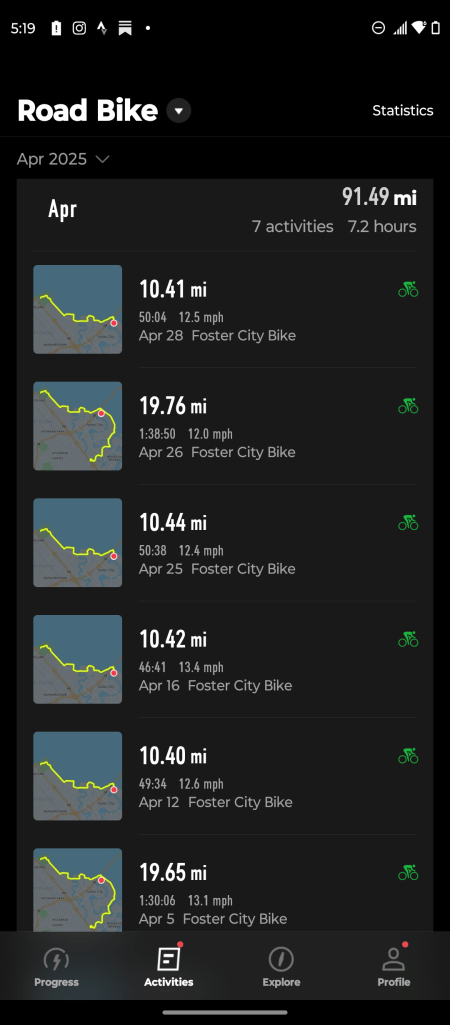
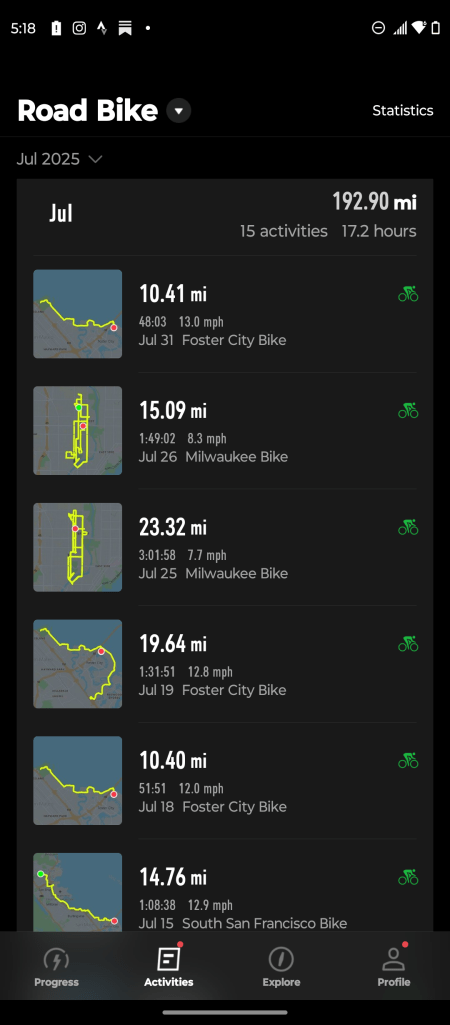
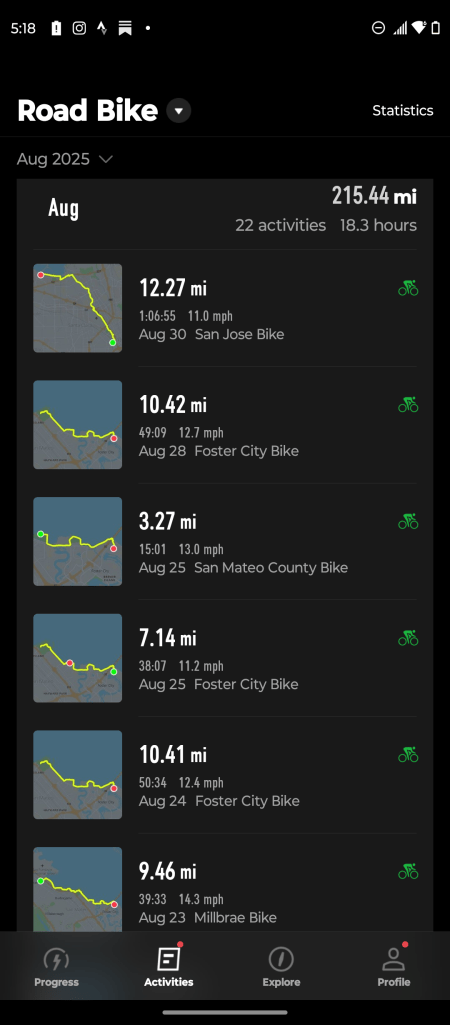
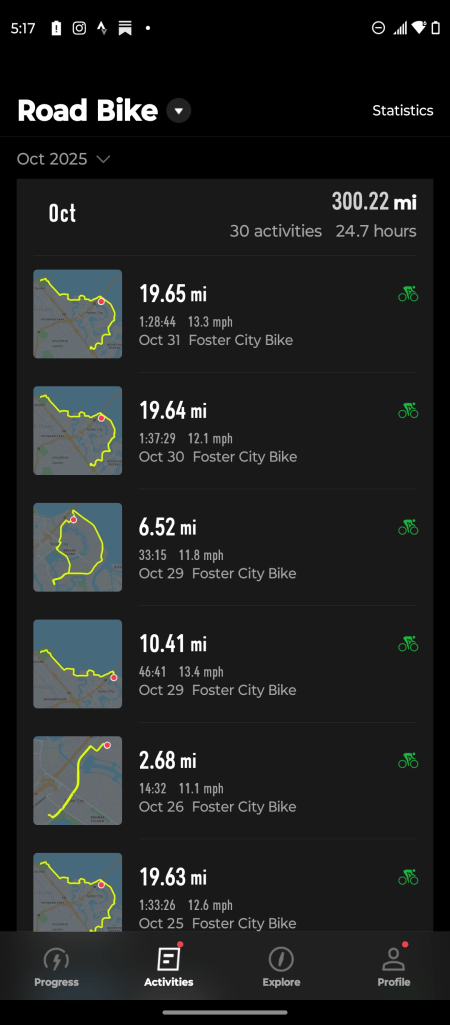
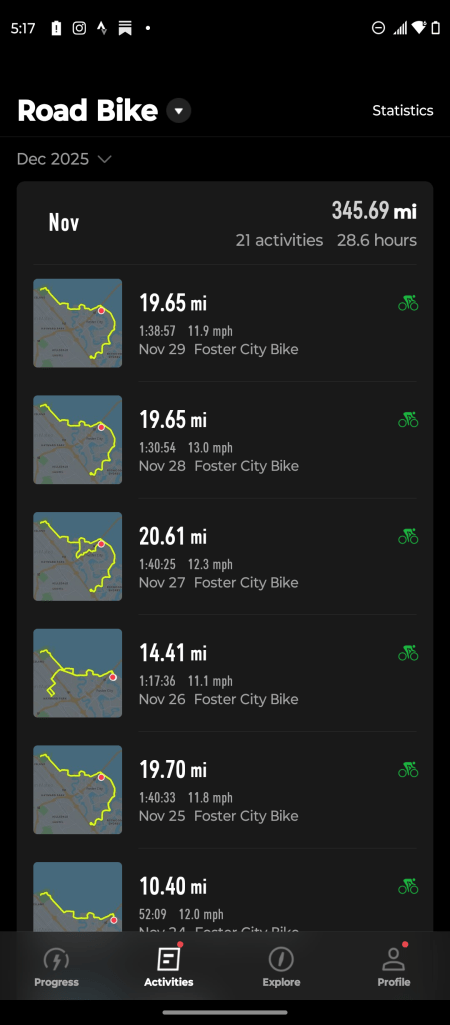
A year ago, my Coros smart watch showed more than 1,000 bicycling miles for 2024. I figured I could double that figure in 2025, but did not call it a goal.

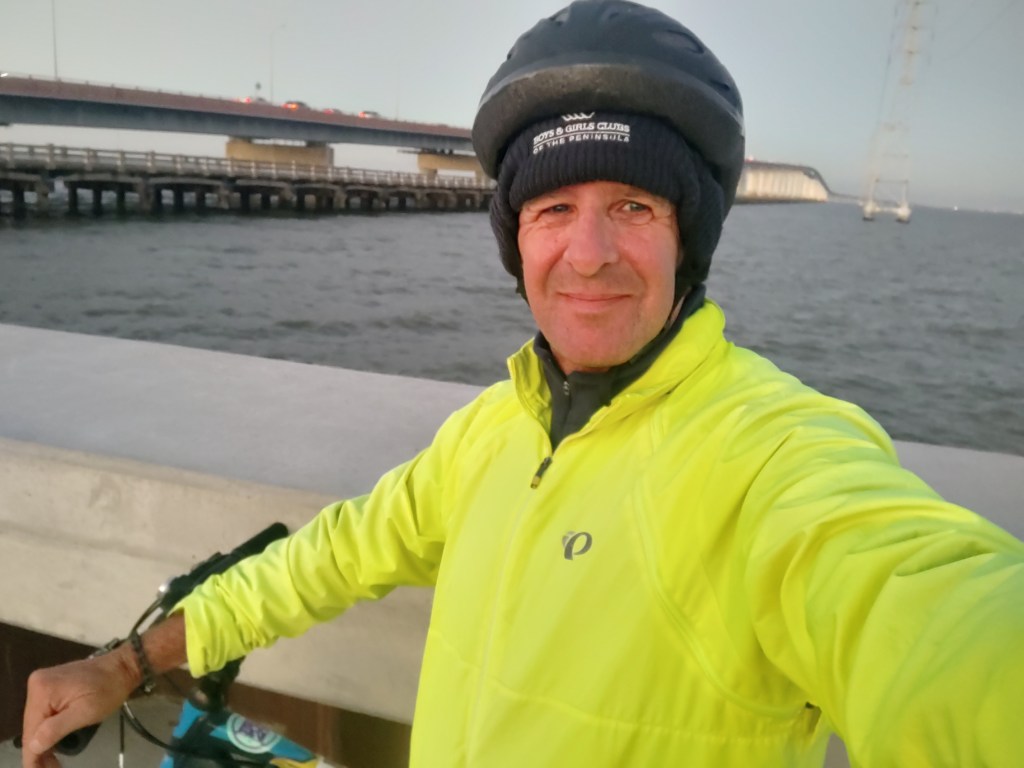
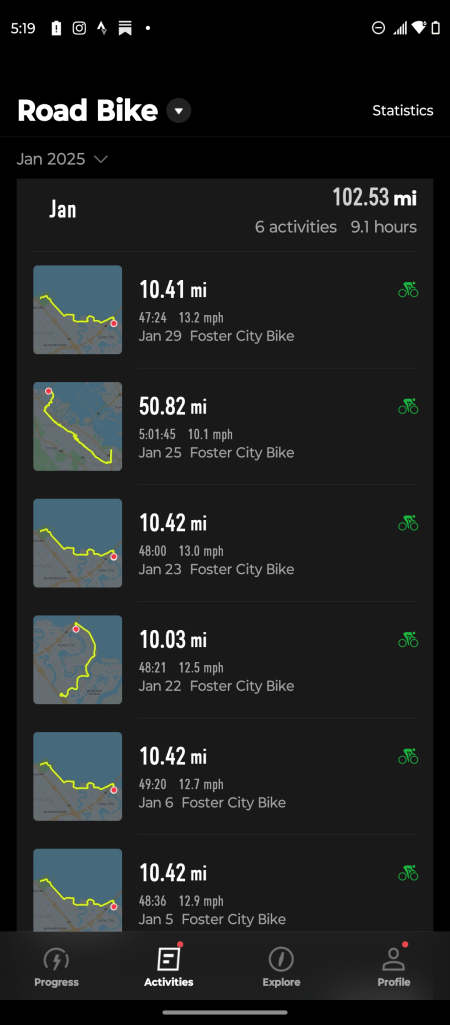
Midway through this year, taking stock of my future, I saw value in setting a minor Yoda goal. I needed exercise and focus. Coros said I had pedaled 664.81 miles at the end of June. So, I decided out loud to go for the goal of 2,000 miles by the end of the year.

Spoiler alert: I achieved that on December 10. More importantly, I (re)learned:

Show up. Vince Lombardi said, “The harder you work, the harder it is to surrender.” That quotation covers many facets of work ethic, including the importance of showing up. Some days it was three miles. Others, it was 30 miles. The most in a single day was 50.82. The more you show up, the more likely you will keep showing up.

Choose a goal that is fun to pursue. That is tied to privilege. If you have that choice, use it. Otherwise, your goal is just a grind. A challenging goal will be a grind anyway, but if it’s only a grind, it’s easier to quit.

Select a goal within my control to achieve. Neither making the basketball team nor gaining the job promotion qualified. Cycling 2,000 miles did, barring injury or catastrophic weather.

Speaking of weather, ride rain or shine. Don’t ride through the kind of storm that can cause sickness or injury that keeps you from your long-term goal. Otherwise, enjoy a little drizzle, which is pleasant, and on sunny days, ride more to save up miles for a rainy day.

Find outside sources of inspiration. My family, Spotify, and Haruki Murakami helped. This blog post could easily be called What I Talk About When I Talk About Bicycling.

Eyes on the prize and also the horizon. While cycling I focused on feeling, on safety, and on the bike’s condition. (I made part of a worn-out chain into a bracelet to wear as a talisman. Let me know if you want an authentic bike chain bracelet.)

Along the Bay Trail and its horizon I also focused on bone-white egrets, blue herons, starling murmurations, pigeons, ducks, geese, gulls, vultures, red-winged blackbirds, and red-tailed hawks, plus recurrent sightings of a coyote I called Monte Diablo after the name of the street that dead-ends into the trail where he sat on his haunches.

The short view and the long view are both integral to any semblance of success.

Keep receipts. They will remind you of the value of setting and achieving goals.
Riding the Riverwest 24: Comments on Community and My First Tattoo

Image

It took Molly a couple years to convince me to ride in the Riverwest 24 Hour Bike Race. Sitting on her balcony in the twilight over our glasses of red wine, Molly always made the event sound appealing for its sense of community and the unique twist of a tattoo that many riders get to commemorate their participation — a grittier, gutsier step beyond “been there, done that, got the t-shirt.”

The more Molly talked about the ride through the Riverwest neighborhood of Milwaukee, the more it sounded like a dare, the mix of athletic challenge and encouragement we’d shared since high school. But now we were 60, and the prospect of bicycling for 24 hours and getting a tattoo seemed absurd.

“You don’t necessarily ride the whole 24 hours,” Molly explained. “You get off the bike for checkpoints, where you can drink a beer or have a community experience in one of the shops or in people’s homes. Some people sleep or trade off shifts with their teammates. It’s not competitive.

“And, you don’t have to get the tattoo” she said with a smile that looked more 16 than 60. “But you know you want to.”

OK. Sold. Which is how we got here.

At the start just in front of Molly, backed by (L. to R.) Maureen, Carol, Brenda, and Colleen, members of Team Millio Zillio.

In the seconds before the 7 p.m. start of the Riverwest 24 on July 26, 2024, roughly 1,800 registered riders are a mass of nervous energy, ringing bells to signal they’re ready to roll.

At the start, cyclists surge forward. Then they stop. The crowd condenses. Sardined in the street with at least 1,800 riders of various ages, abilities, and levels of patience and competitiveness, it suddenly seemed a lot could go wrong. Less than a week after Milwaukee hosted the Republican National Convention, hair trigger tempers remained as hot as the air temperature.

Plus, the Riverwest 24 coincided with the Milwaukee Air & Water Show, featuring the U.S. Air Force Thunderbirds, and the Harley-Davidson Homecoming, bringing thousands of riders new to Milwaukee’s streets, who were bound to be frustrated by bicycle traffic. The threat and promise of sonic booms and backfires jangled nerves.

With scant police presence assigned to our ride, our community would police itself. Fortunately, Riverwest 24 organizers guided us with simple reminders.

Gradually, riders spread throughout the 4.6 mile course. Speedsters sped. We in the “Elder” category that Molly signed us up for did not.

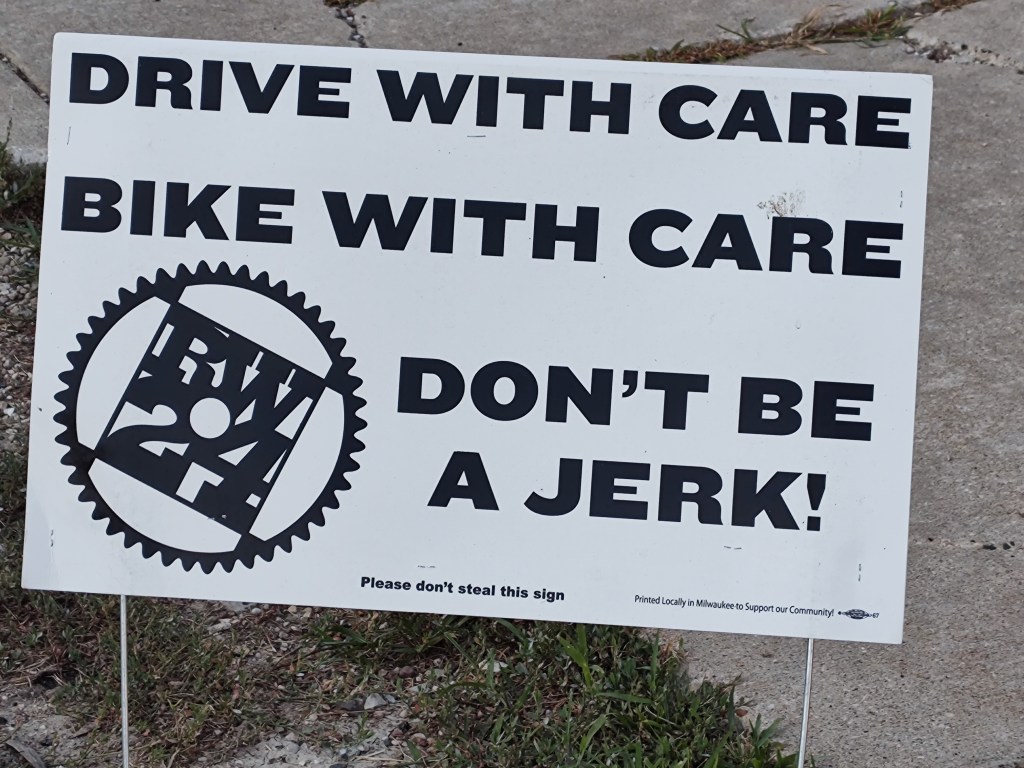
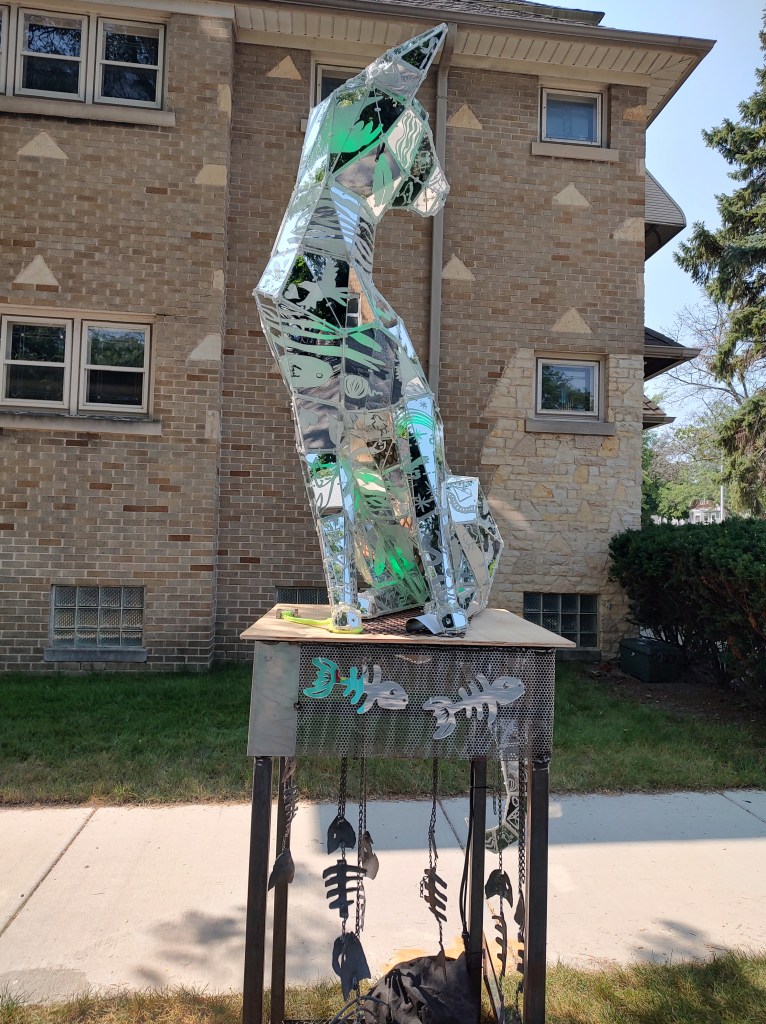
Instead, we enjoyed high-fiving the little kids lining the residential streets in front of their parents’ homes or shade tents standing curbside. We basked in their cheers and encouragement, laughed at humorous handmade signs, and admired artwork scattered throughout the route.

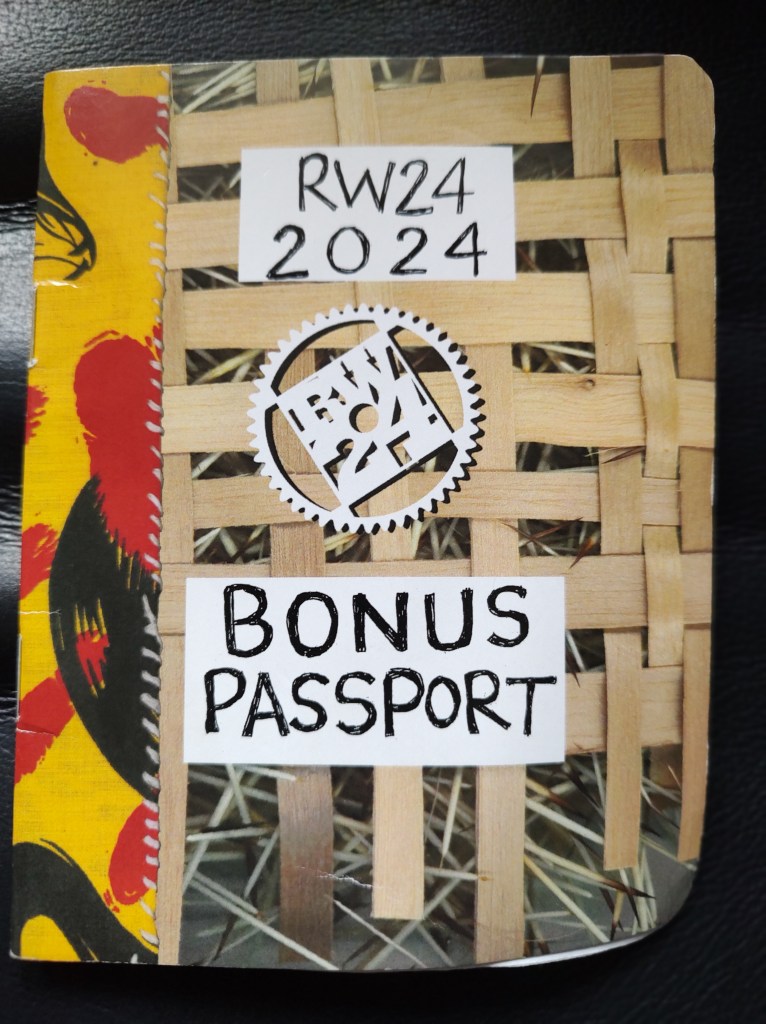
Occasionally, we stopped at “bonus checkpoints” to get our “passports” stamped, earning points in addition to those for each completed course lap.

The bonus checkpoints brought us into homes, businesses and parks, where we participated in cleverly named non-cycling activities. For example, “Don’t Pull a Hammy” provided a stretching session inside the cavernous Dropout Fight Club boxing gym, and “Let the Rhythm Move You” at Wu-Tang Park offered a group belly dancing lesson.

From about 9-11 p.m., we took a break from our bikes to watch a street circus from Molly’s balcony.

Then, just Carol and I ventured back out for more laps and checkpoints. The laps led us past pulse-pounding street parties, live bands, DJs, drunken revelry, and all the rest of the eclectic energy that marks the Riverwest community.

My favorite checkpoint was “A Night at the Museum” in the Jazz Gallery Center for the Arts, housed at the old Jazz Gallery performance space, where, as a high school senior, I watched Art Pepper play alto just weeks before he died. While Carol perused the Riverwest 24 memorabilia display, I got lost in the jazz artifacts and a recording of the late great Milwaukee jazz radio DJ Ron Cuzner and was transported back to 1982.

Other checkpoints reflected the quirkiness of the Riverwest community. “What Are You Buying? What Are You selling?” featured a masked and hooded man inside a candle-lit tent on the Beerline bicycle trail, who mutely helped us discern how to complete a transaction for a vial of “potion” that turned out to be an ounce of kombucha. In someone’s basement we threw darts at balloons for a chance to win a container of Cup Noodles ramen. By 2:30 a.m., I needed off the streets with about 23 miles behind me.

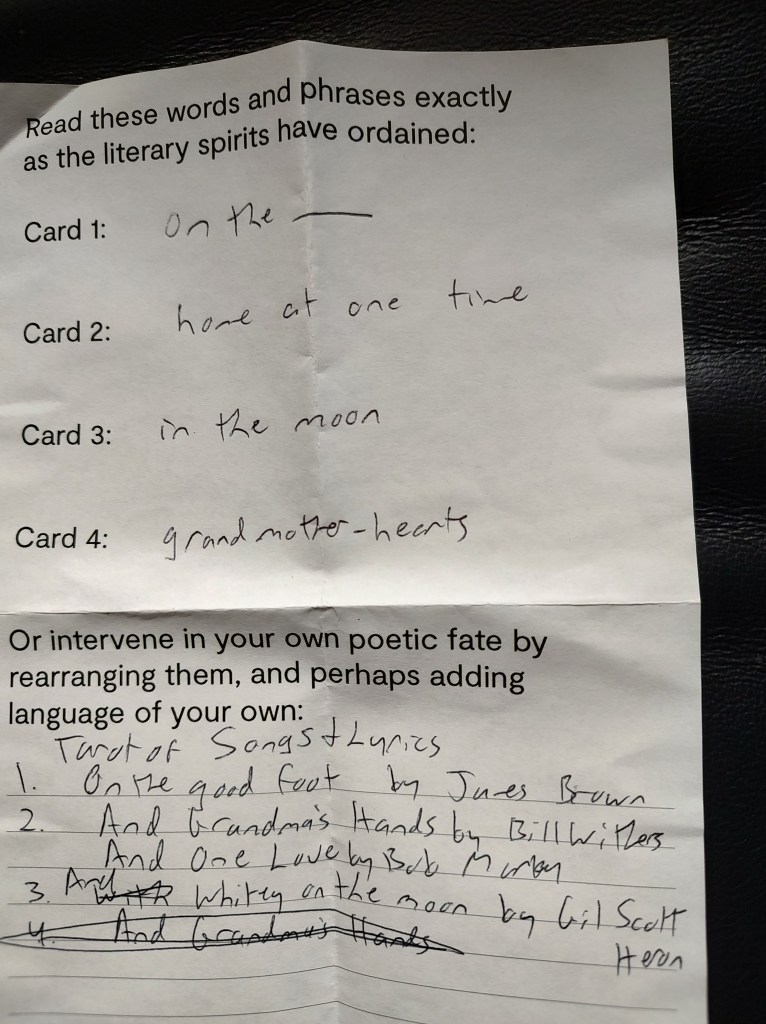
I slept from 3-6 a.m. By 7, I was back out on the bike for the day’s first bonus checkpoint. “Poetry Tarot” occurred at Woodland Pattern, an independent bookstore that sells my book Az Der Papa. To get my passport stamped, I sat for a turn of tarot cards with random phrases that I was told to transcribe, edit into a new piece of writing, and read aloud on the mic to whoever was in the street.

Our Team Millio Zillio group text re-convened us at Woodland Pattern, where we planned a strategy to help our team complete a total of 20 laps before the race ended 12 hours later. Through a comedy of flat tires, needing to meet teammates’ delightful adult children at various checkpoints, and wanting a traditional Milwaukee brunch of Bloody Mary, we rode — sometimes alone and other times together — until an appointed stop at “The Pride of Milwaukee” checkpoint, which opened at noon at Black Husky Brewing.

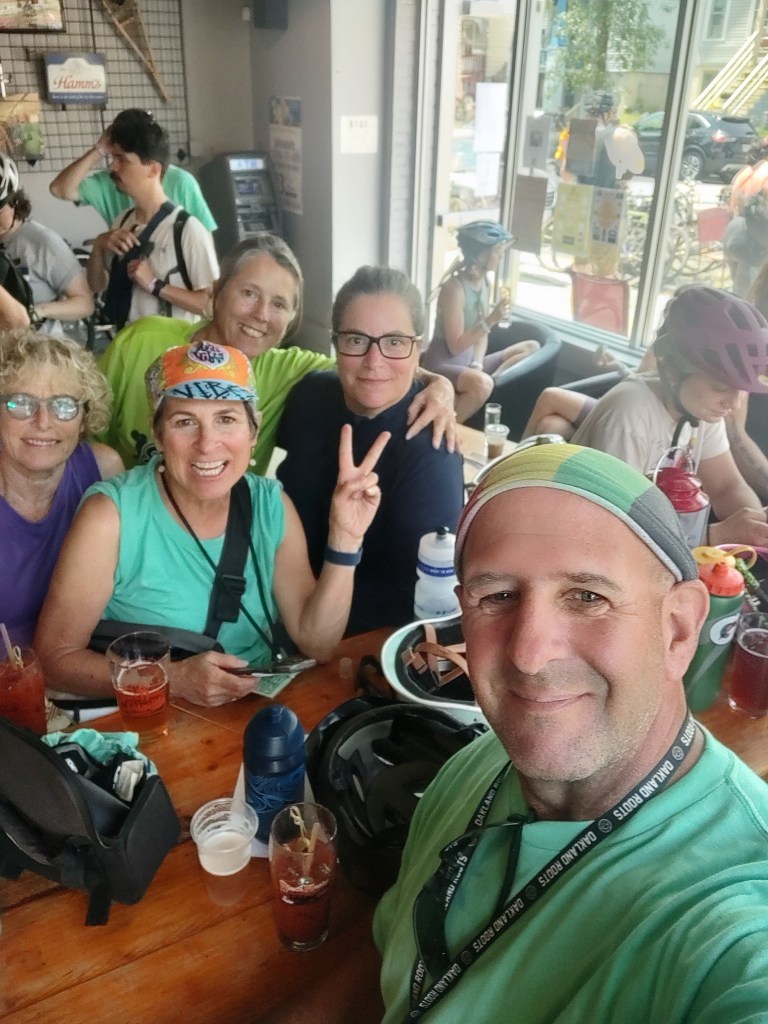
Damn good Bloody Mary served Wisconsin style with a chaser of pilsner brewed onsite and damn fine company as we ran into old high school buddy Mike D’Amato (not pictured).

From there, we ground through laps to get our goal in the 82-degree heat, amid the cacophony of Harleys and Air Force jets, surrounded by swarms of competitive cyclists. We were sleepy and sore, but fueled by free food at one of the checkpoints and soaked in sweet relief by sprinklers and squirt-gun toting curbside kids. The Riverwest community rallied around us and kept us going.

By about 6 p.m., we finished our 20th lap. Riverwest 24 officials at the final checkpoint punched the last hole in the second page of our official race manifest.

We rode to our 6:30 tattoo appointments at Falcon Bowl, established 1915. We waited at the bar, replenishing our precious bodily fluids and building our courage until it was time to climb the narrow staircase in stifling heat to an office space/tattoo parlor. For about five minutes and with minimal pain, we permanently commemorated our ride, earning the bonus points that put us in a 7th-place tie on the leaderboard among 19 teams in the Elder category.

Our most important business complete, we rode back to the finish line, just as the race officially ended, satisfied with these stats.

We sat on the patio of Club 99, watching people take turns launching their bikes off the ramp at the Cheese Jump.

Over our last beers of the Riverwest 24, we swapped stories of our own adventures and gratitude for the community commitment it took to manage 1,800 riders and untold numbers of spectators, from the top echelon of organizers to each and every volunteer pool noodler who directed traffic over the previous 24 hours, keeping us safe, sane, and supremely satisfied with our experience.

Willie Mays

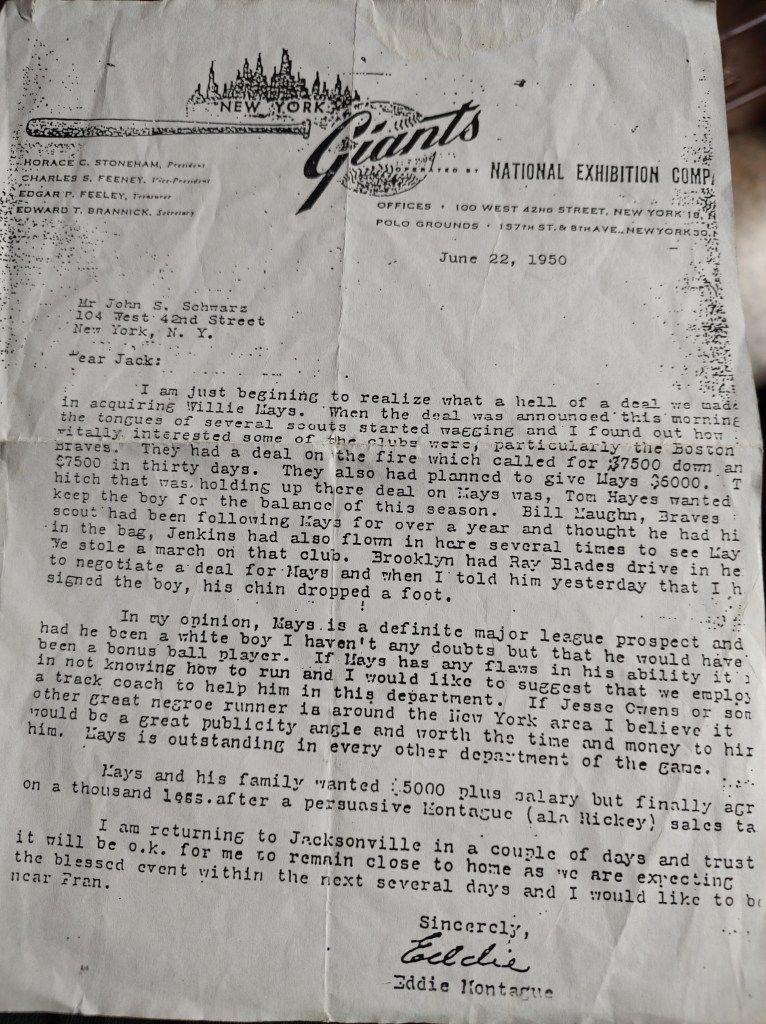
Upon yesterday’s news of Willie Mays passing, three thoughts leapt to mind. The first was local Bay Area baseball talk with a bartender and a mention of the Montague family, which prompted him to hand me this photocopy.

The second thought was a memory of Mays, excerpted here from a  blog item I wrote nearly 20 years ago.

“The weekend before Barry Bonds received his seventh Most Valuable Player Award, his Godfather, some would say The Godfather, was signing autographs at the Long’s Drug Store at a strip mall in San Bruno. 

“Now, a few weeks later, Bonds is disgraced, his records in question due to his testimony in the BALCO steroid scandal. And Willie Mays, The Say Hey Kid, star of the All-Time, All-American Sports Highlight – The Catch in the 1954 World Series – was signing autographs at the Long’s Drug Store at a strip mall in San Bruno.

“To his credit, Mays packed them in at the drug store. The previous crowd record for that particular Long’s location was Free Bone-Density Testing Day. The line for Mays autographs formed at 4 a.m., eight hours before the signing session started. By noon, generations of Giants fans, the older ones wearing Number 24 jerseys and the younger wearing Number 25, wrapped around the outside of the store.

“They clutched memories and time-worn photos and smudged baseballs and at least one treasured 1970 Topps card, from which Mays gazed, equal parts competitive intensity and unbridled joy. Just posing for his baseball card photo, he was the picture of everything we wanted an athletic hero to be.

“Even as a singular star, the Michael Jordan of his day, who captivated the nation with skill unrivaled at the plate, on the bases and in the field, Willie Mays played stickball with neighborhood kids in the streets of New York. He was a man of the people, and he remains so, at least inasmuch as he did not charge fans for his signature.”

And the third thought, perhaps everyone’s always-and-forever thought of Mays, shared below.

Dusty Baker

That was the day that Dusty Baker, who managed the Houston Astros to a World Series win tonight, received Positive Coaching Alliance’s Lifetime Achievement Award. I asked Dusty for a photo together, and Willie Gault, star receiver for the 1986 Super Bowl Champion Chicago Bears, came over from my left and said, “We gonna make an Oreo out of you.”

It was always a good time with Dusty. Just a few minutes earlier that day, Dusty and I talked about his tour of Apple Computer headquarters at One Infinite Loop, which he called an architectural marvel. As a Cubs fan, I told him he’d already seen the most marvelous architectural wonder in the world. He thought about it for a few seconds and asked, “Which one is that?”

“Wrigley Field,” I responded, and in less than a few seconds, he said, “Aww, man, that place is a dump!”

At a different Positive Coaching Alliance event, where we first met, he was coming off surgery and hobbled through the lunch line on his cane, a beautiful knotted dark hardwood adorned with feathers and other talismans that lent him a mystical air. In a private room at the Stanford Faculty Club, he told tales of his time in the minor leagues in the South of the late ’60s, post-Jim Crow by letter of the law, but not its spirit.

Somehow, in that room of 20 or so souls, with conversation gravitating to counter-cultural sports icons, Dusty mentioned the legendary football player, Joe Don Looney and asked if anyone knew his story.

“He was an outstanding bar fighter,” I answered. “Yes,” Dusty confirmed, “One of the best.”

“I think he also decked Bud Wilkinson at Oklahoma,” I added.

“One of his assistants,” Dusty corrected.

It all went to building rapport that stretched over a few video shoots we did together for Positive Coaching Alliance. Here is my favorite clip, mixing the fun and seriousness Dusty brought to his work, which finally resulted in tonight’s World Series win.

Inside the Making of “The Man Behind the Mask”

(New book available here, as seen on American Ninja Warrior, with a portion of proceeds benefiting Barbara Sinatra Children’s Center in its fight against child abuse.)

When the July 18 episode of American Ninja Warrior featured The Man Behind the Mask – a book I crafted in collaboration with Flip Rodriguez and Noah Kaufman – I felt like I’d “beat that wall” and hit the buzzer. Pardon my slip into Ninja-speak here. It’s what I had to do to land the book gig in the first place.

Skeptical of a reality-TV sport, I initially resisted an introduction to these Ninjas. I soon knew they spoke my language, and I soon started speaking theirs. Therein lies the first of several lessons I learned en route to the making of The Man Behind the Mask, shared here to help other entrepreneurs, especially in the creative fields.

That first lesson: Listen.

Listen
Amy Manson, a colleague when I led marketing communications at Positive Coaching Alliance, asked me to explore partnership with a group called Wolfpack Ninjas. She offered to connect me with the group’s leader, Noah Kaufman, the physician who starred on American Ninja Warrior as “The Ninjadoc.”

Accustomed to partnership with Hall of Fame athletes, coaches and teams from the major pro sports leagues, hearing a name that sounded more like a WWE character stopped me cold. As the saying goes, “Nevertheless, she persisted.”

I relented when Amy explained that the Wolfpack Ninjas were “making the world healthier one kid at a time,” and Noah practically had me at hello. Within minutes we found that we hailed from neighboring suburbs outside of Chicago and that his group and ours both focused on youth-friendly principles of sports and educational psychology.

Noah said he could demonstrate this via video he would send me. Most such promises from other partnership prospects over the years were never kept. But when Noah’s video arrived the next day, I was glad I listened to Amy and glad I listened to Noah.

His well-produced minute-long cellphone video featured him speaking in voice-over shots of his son repeatedly failing to scale a Warped Wall until he finally succeeded. Noah’s video nailed our PCA principles. When I asked how he’d done such a good job so quickly, Noah said, without irony, “I’m a Ninja.”

Throughout that partnership, we discovered similar values and skill sets, often finding the other answering emails at 2 a.m. While co-promoting and attending Wolfpack Ninjas events, I connected with many of Noah’s team of about 30 Ninjas. But that phase of our work abruptly ended when PCA laid me off in August 2017, leading to the next lesson in the making of The Man Behind the Mask.

Say Yes
Phoning Noah to explain my departure, he thanked me and said, “This layoff must be sad for you, so I don’t want to seem overly opportunistic, but would you consider contracting with us?” I answered, “Thanks. It is sad for me, and I also don’t want to seem overly opportunistic, but honestly, that’s part of why I’m calling. So, yes.”

Over the next two-plus years, our group worked hard, traveled together, stayed up late, and sweated out mission-critical assignments, quite literally, in the case of a playground build with KABOOM! on a 95-degree day in San Antonio. We forged the sort of bonds that uniquely arise from those circumstances.

The rewards of friendship, achievement, and adopting the mindset of these world-class athletes made me happy I’d said, “Yes,” especially because our San Antonio team included Flip Rodriguez, who is The Man Behind the Mask. One other reward was learning more lessons.

Sometimes Work for Free
The pandemic halted our live events. Noah’s financial backers ended our contract. With their blessing I contacted the Ninjas individually and landed a couple sweat-equity-only gigs.

Though I never saw cent one, I enjoyed the work and continued growing, which reinforced the lesson to “Say Yes.” I have no doubt that is why Noah contacted me late in 2021 with an offer of paid work on The Man Behind the Mask, a process that taught me one more lesson.

Play to Your Strengths, and Help Your Collaborators Do the Same
Noah Kaufman knows business. He runs it for our collaboration. Flip and I stay out of the way.

Another of Noah’s strengths is that he knew Flip well enough to help him open up in the eight hours of conversation they recorded for the core of the book. Flip’s story is so agonizing that he sometimes had to stop talking, and Noah, The Ninjadoc, masterfully supported and encouraged Flip as he would any trauma patient in the ER.

Flip’s strength is his honesty and courage. It’s not fearlessness. It’s his ability to overcome fear. That he endured his trauma is evidence. That he purposefully re-lived his trauma in the telling of his story shows the strength of his conviction to “get comfortable being uncomfortable” and the depth of his commitment.

Me, I know words. I edited theirs into a coherent narrative, wrote the book’s afterword, and this marketing copy for our Amazon page: “Read the real and raw story of Flip Rodriguez, the ‘Man Behind the Mask.’ In this inspirational story, the American Ninja Warrior star explains how he overcame years of sexual abuse during his childhood and lifted himself from the depths of despair to unimaginable heights.”

Sweetness

Walter “Sweetness” Payton (pictured on my shirt) famously ran hills in the heat, first on a sandbank of the Pearl River outside his hometown of Columbia, MS and later on the landfill in Arlington Heights, IL now known as “Payton’s Hill.” As part of the sports and fitness fantasies sustaining me for nearly 58 years, I draw inspiration from trying to replicate my heroes’ feats, albeit with age-and-ability-appropriate modifications.

So, on the hottest day of the year, I wear Walter to the local landfill at Seal Point Park to run my own version of his workout. Sweetness called his hill “The Widow-Maker.” I call mine “Motherfucker.”

On the dirt trails up from the parking lot and/or the stairs cut into the bay side of the hill, the workout is sprint up (about 30 seconds) walk down (about 90 seconds) x 10. On a good day, allowing for a few extra steps at the end of each lap, I finish that HIIT (high-intensity interval training) workout in 23 minutes.

Spotify plays my Run list from the phone in my pocket. Other distractions from the pain include pelicans gliding low above the bay, the rare hare bounding along the trails, and even a snake slithering across my path.

Then there is the human wildlife, the regulars who inhabit the hill, all given secret nicknames for their attire, their physique, or their other bodily adornments. On any given day there’s Beanie, Lefty, Sideboob, Osama, Chihuahua, and Ab-Tats.

To keep myself going on those 10 laps, self-talk:

1. “Get one done.”
2. “That’s two for you.”
3. “Feeling it now.”
4. “Starting to sweat.”
5. “Halfway.”
6. “More than halfway.”
7. “Just three more.”
8. “There’s that one-mile buzz on my smartwatch.”
9. “I can’t breathe.”
10. “Come on, Motherfucker.”

In that last one, I address both the hill and myself as opponents. Throughout my “athletic” career, that 12-letter word has always issued challenge. It’s the gauntlet thrown by pick-up basketball foes and anyone ready to fight or at least find out if you’re ready to fight.

Like Sweetness, every day that I run hills in the heat, yes, I am ready to fight, at least against myself.

D.C.’s Hot Days and Nights

After dark on May 2, D.C. wasn’t overly hot, walking from my de facto headquarters at The Hamilton back to Hotel Harrington. The night held just a hint of humidity, a soft blanket that subtly alluded to the city’s notorious sweat soakings.

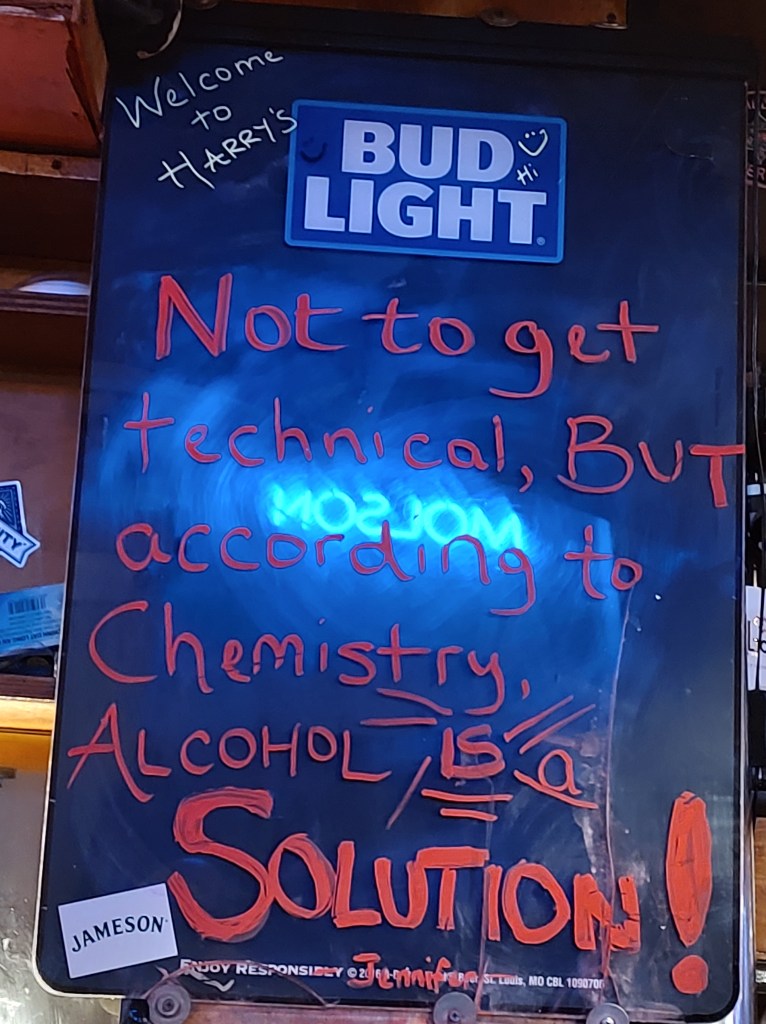
Nothing even happening at Harry’s, the often-rowdy dive bar in the Harrington, which is a dive hotel like the one where Robert Blake and Tom Ewell lived in the old Baretta TV series. But it’s worth staying there for the old-school “charm” at half the price of anywhere else such a short walk from the White House and even more importantly The Hamilton.

But up in my room, where the blackout drapes almost met closely enough to keep the light out, CNN let me know we’d feel heat the next day. The news broke about the Supreme Court’s draft opinion re: Roe v. Wade.

Sleep with CNN spicing my dreams segued into waking surrealism. The candidate’s team communications platform overflowed with internal messages, mostly of the wailing-and-gnashing-of-teeth variety. I would have to directly phone the candidate back in Houston to sort this out.

And it would have to happen while walking to the day’s destinations, familiar haunts from my past D.C. visits. I refused to forego the pilgrimages I’d planned on top of a two-day out-and-back from San Francisco to D.C. built around representing my client, Fit Kids, at the Aspen Institute’s Project Play Summit.

The call came at 10 a.m. from the candidate — Cameron “Coach Cam” Campbell, known for the #GridironGrit he brings from his football coaching career to his campaign to “go to state” as the representative for Texas House District 132. Yes, in Texas, it takes nothing less than #GridironGrit grit for a Black man to turn a red seat blue.

Between Coach Cam’s infant and toddler in his office and the street shouts and sirens that started to wane when I walked the gentrified U Street Corridor, we somehow managed to mostly understand each other. I would duck into Busboys and Poets, the progressive bookstore/cafe, for inspiration…

…and I would take my findings — which this time included The Trayvon Generation by Elizabeth Alexander and Create Dangerously: The Power and Responsibility of the Artist by Albert Camus — to a proper office to compose a statement on SCOTUS for Coach Cam’s consideration.

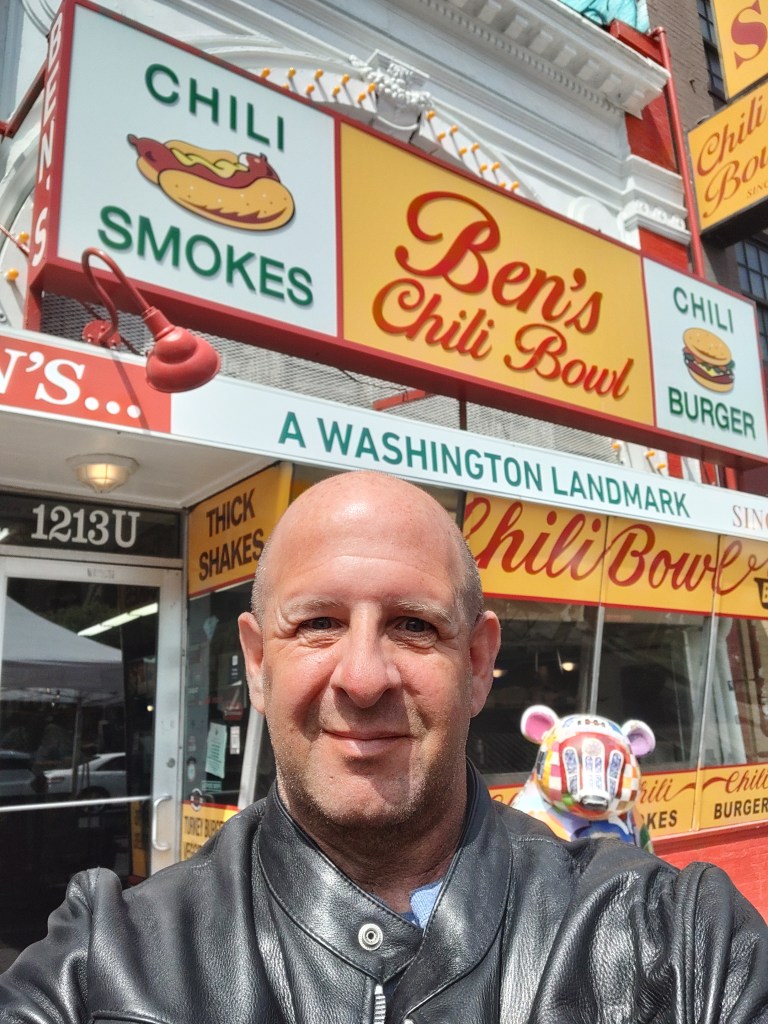
In my booth at Ben’s, fueled by the vibe and an Original Chili Half Smoke, I wrote: The Supreme Court opinion that came out yesterday demonstrates the vast overreach and ruthless power grab of the political right, reaching right down into the most intimate and personal aspects of women’s lives. The right, embodied by the Republican Party, does this against the will of the people they are sworn to represent. It is up to us as individuals — politicians and constituents alike, starting at the local level — to use our voice and our vote to protect our legal rights. The Supreme Court stands poised to trigger the worst of what Texas Republicans already have decided. Our best defense against the violation of our civil rights and human rights is to remove Republicans from power, and I intend do so in HD 132.

With Coach Cam more or less signed off on that, a long, hot walk had me hit the Smithsonian’s National Museum of the American Indian an hour before closing. On the way there, and then to happy hour at Off the Record in the famous Hay-Adams Hotel, glimpses of the Washington Monument, the U.S. Capitol, and the White House had me feeling some type of way.

The sight of the buildings themselves are so iconic, so burned into my brain as a patriot-in-training from earliest memory, that they raise a reverence. But knowing what their residents and honorees perpetrated is just as breath-taking.

Sitting in Off the Record — elbow-to-elbow crowd clamor drowning out CNN’s continuing coverage of the not-yet-24-hour-old SCOTUS news — I wondered who around me shaped policy in which ways. In those surroundings, politics feel real.

It was nothing a stop at headquarters couldn’t cure. So I walked back out into higher heat and humidity than the night before.

Coronavirus Diary: Opening Day

It’s been decades since baseball was America’s national pastime, but the sport still speaks volumes about America. The state of our nation was on display Thursday night at Nationals Park, which was almost entirely empty due to the Coronavirus crisis.

Even with no fans in attendance to boo him as they did at the 2019 World Series, Trump did not throw out the ceremonial first pitch and likely will leave office as one of the few U.S. presidents in the past 100-plus years never to participate in that tradition. Similar to Trump’s abandoning the fight against the Coronavirus crisis, leaving Dr. Anthony Fauci as the trusted public face in that battle, Fauci supplanted Trump on the pitcher’s mound.

Unfortunately, Fauci’s toss displayed all the quality of Trump’s approach to the virus.

The rest of the evening wasn’t much better. The awful rendition of “The Star-Spangled Banner” at Nationals Park had some fans longing for the Roseanne Barr version. The fake crowd noise and cardboard cutouts representing fans in the stands at Dodgers Stadium for the evening’s second game reminded the nation that next to nothing was normal.

Still, there was hope. For just a few minutes in the seventh inning the game itself took over. Watching Mookie Betts’ breathtaking baserunning reminded us of baseball’s beauty. Lost in the drama and athleticism as Betts slid headfirst into home plate for the go-ahead run, we remembered how to forget.

Next in series: Coronavirus Diary: NBA Restart

Series starts at Coronavirus Diary: Introduction

Coronavirus Diary: Re-Opening

It’s been more than two weeks since my last diary entry. The main reason is that news, thinking, talking, and writing about protests stemming from the murder of George Floyd have consumed my days and nights. I’ve also focused on selling copies of Az Der Papa and worked extensively with students from my “On Point” class at The Writing Salon.

I could not have imagined anything usurping my mindshare from the Coronavirus crisis, but because of who I am, where I’ve lived, and how my friends are, the anti-racism concerns take precedence. I won’t comment further here on anti-racism to keep this diary as purely as possible about Coronavirus.

As to that, signs (or lack thereof) indicate that much is re-opening. Most importantly, the stairs at my running hill shed their police tape and detour signs about a week ago. It has been a blessing to return to running, now mixed in with cycling as much as 20 miles at a time, to keep me as physically and mentally healthy as possible.

Some live televised sports have resumed, notably boxing, golf, and European soccer. More restaurants, shopping, and other services are now available. We have even seen a few friends in recent days as well as light at the end of the tunnel…at least for now.

Next post in series: Coronavirus Diary: Funeral

Series starts at Coronavirus Diary: Introduction