The more I lead From Memories to Memoirs writing workshops, both at The Writing Salon and in private practice, the hungrier I get to teach more memoir. Maybe that’s due to contact with several writers cooking up food-fueled memoirs.
This recent streak includes works-in-progress by my high school friend Jennifer Czizek Kastner and by my Minneapolis friend-in-law, Chef David Fhima. Next came VC Tang, whom I met on a local arts group Zoom and then at her performance/presentation where she fed us literally and literarily.
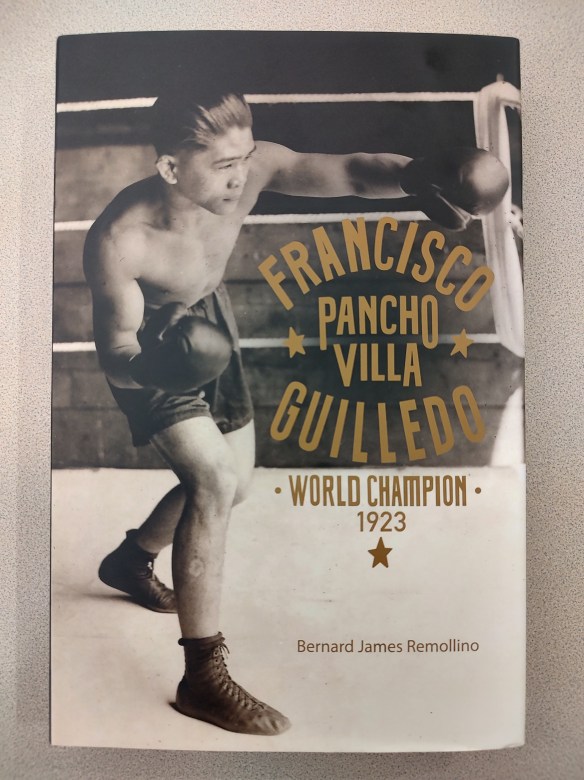
Soon after, my youth sports coaching friend, Carolyn Sideco, brought me to a cultural festival disguised as a book launch for Bernard James Remollino’s Pancho Villa: World Champion, 1923. There, Chef Alex Suniga (@masarapthehomie) spoke movingly from the podium about deepening ties to his Filipino heritage through his cooking.
All of these food-as-connection-to-diasporic-culture moments provided enough food for thought that I started snacking on matzo. Then I saw this:
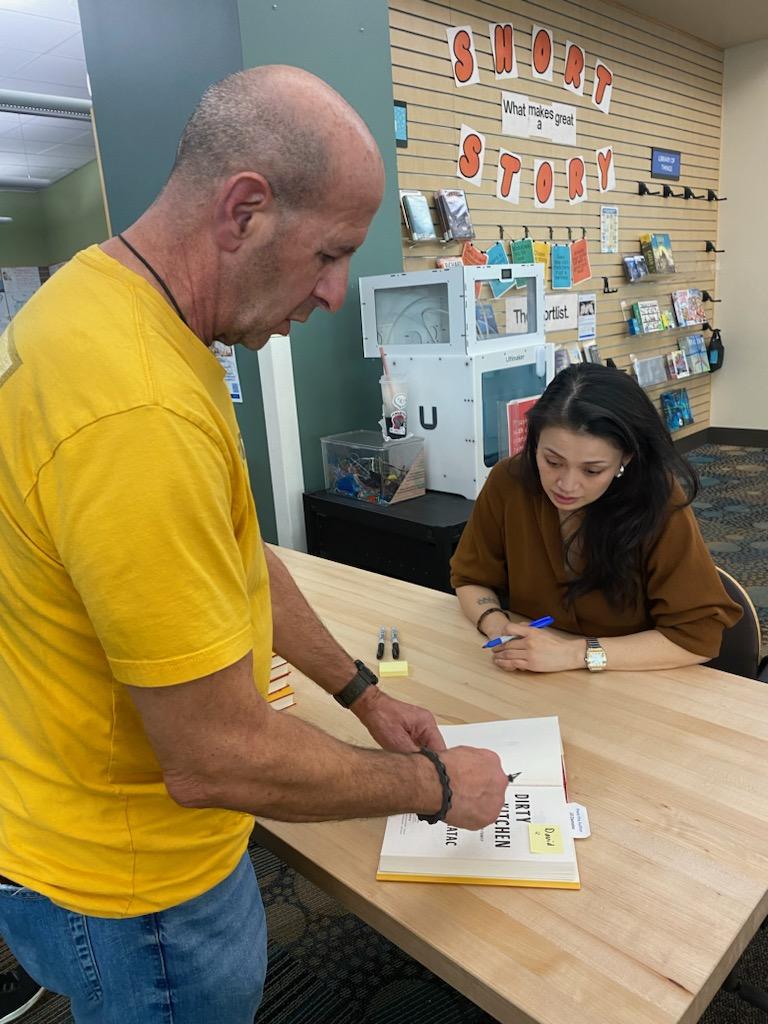
Obviously, I had to attend. The library provided me a free copy of the book in advance so I could finish reading before the event. There, Carolyn joined me, and we ran into VC, who knew Carolyn from church, and we all had a full-circle experience. Carolyn kindly shot these videos (no spoilers for this must-read memoir!) of me learning from an author whose book already had infiltrated my memoir workshop and will continue to do so.
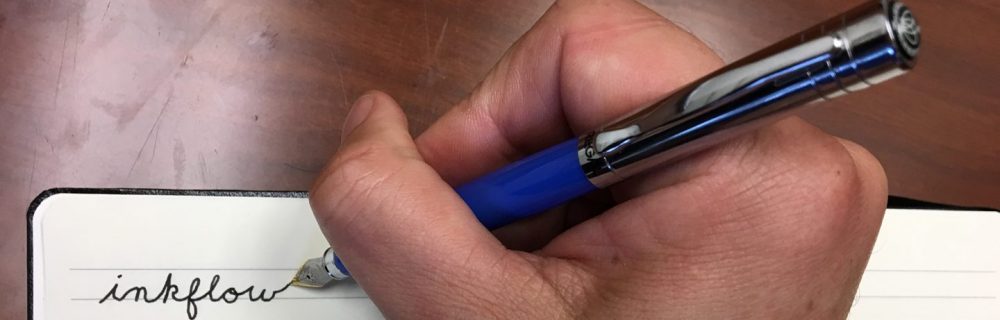
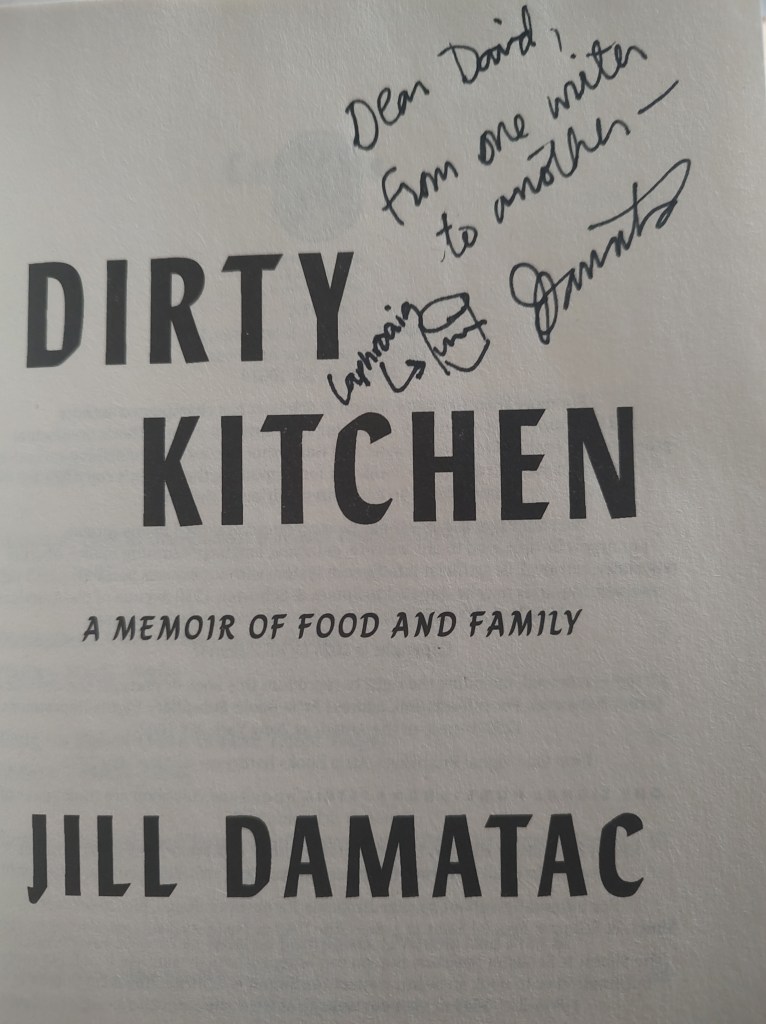
After her reading, Jill graciously agreed to sign my copy of Dirty Kitchen with my Sailor fountain pen when I hoped out loud that might mean her memoir magic would transfer to me.
She even sketched a reference to a taste we share.
Since “He-Who-Must-Not-Be Named” Knelt on the neck Of “Say His Name, George Floyd” You’ve held our nation’s hope. Now a new “He-Who-Must-Not-Be-Named” Kneels on all our necks. Nameless until our nation’s Nuremberg, Because acclaim of his name is his aim, As sure as Three shots to the face Of “Say Her Name, Renee Good” Practically proved that he “Could stand in the middle of Fifth Avenue…”
Those shots shattered Froze my response Until now when heat rises distant For your democracy’s-death-defying 47-below-with-wind-chill march And deadline urgency Burning since my Minnesota Daily years Pushes me to press play by your 2 p.m. On these memories of your hundreds of beloveds.
Classmates, street-prophet poets Like Malik Del Mar, Sandwich builders, mad carpenters, Dylan wannabes, the King of Wings, and Every striving Somali cabbie Speaking crystalline American English cleaner Than “He-Who-Must-Not-Be-Named.”
And professors who taught jazz, Wu Daozi, Catullus, and Huey Newton, Who administered The BITCH 100, Summa cum lauded honesty In our chapters and verses, Ran for mayor of Minneapolis As a Communist.
And women who received my love poems (Or did not for my fears), Strong feminists without effeminizing, Who left me a far better man Than they found — Through firelight wonderings, Mental wanderings over 4 a.m. cigarettes and coffee, Closing ranks against Cold closed hearts.
Hundreds of beloveds, My heart bleeds, but beats warm for you today.
For a long time, I avoided setting long-term goals. Falling short of some over the decades – make the basketball team, gain the job promotion – devastated me. My painful reaction made goal-setting seem a vulnerability that was not worth the risk.
This did not include goals I considered minor (beating deadline) or subjective (being a good dad). I almost always achieved those. But no major, objectively measurable, Yoda goals: “Do or do not. There is no try.”
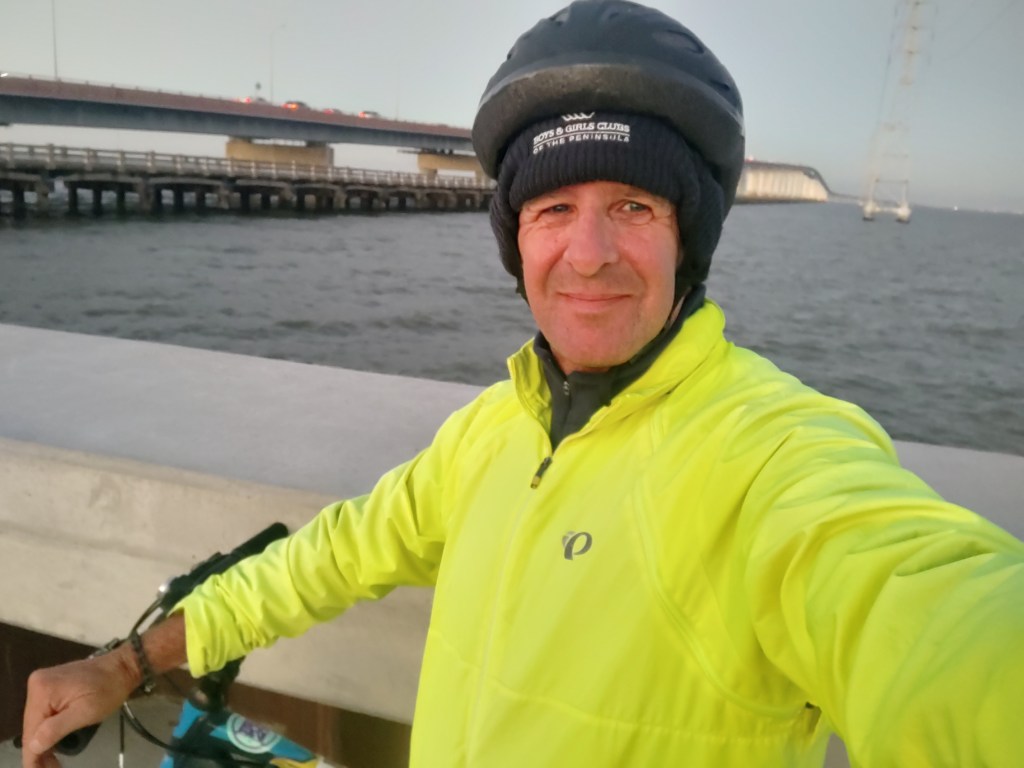
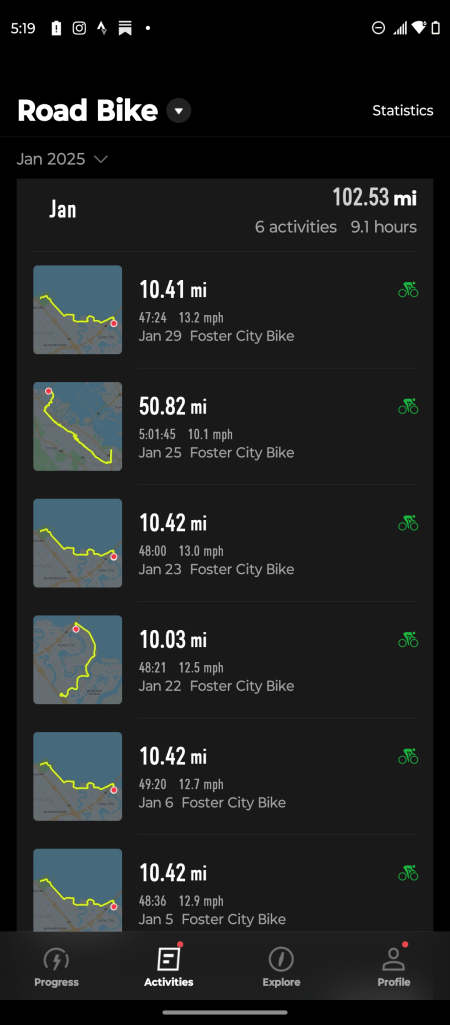
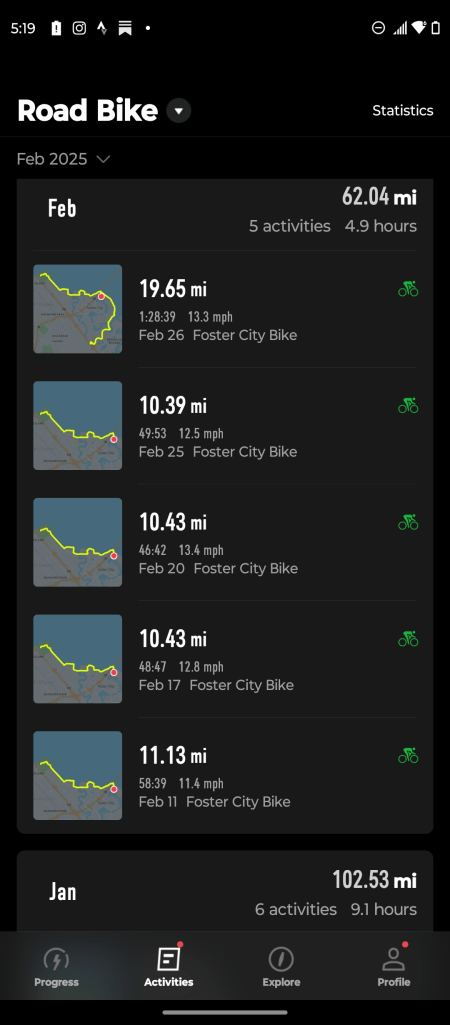
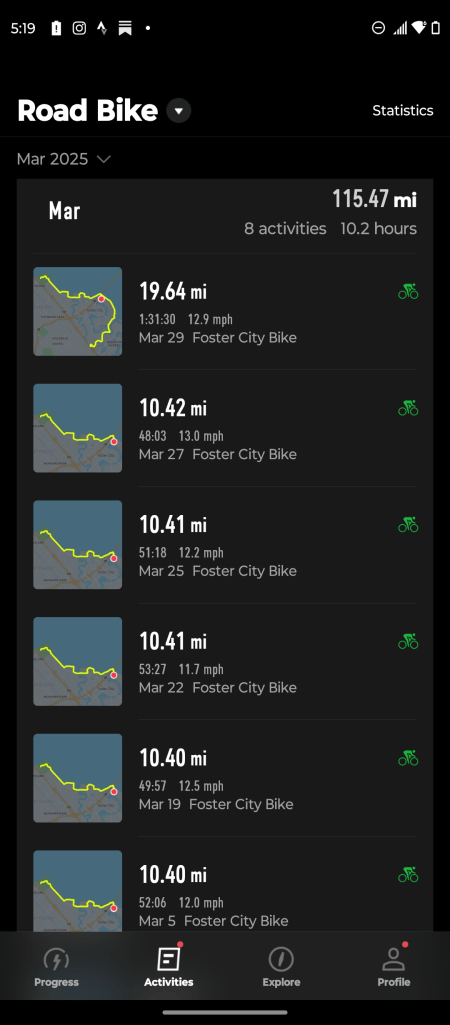
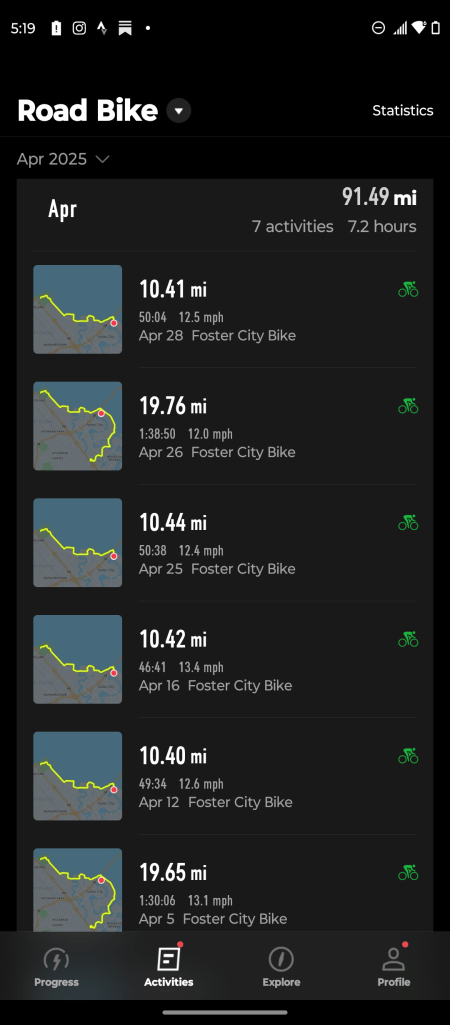
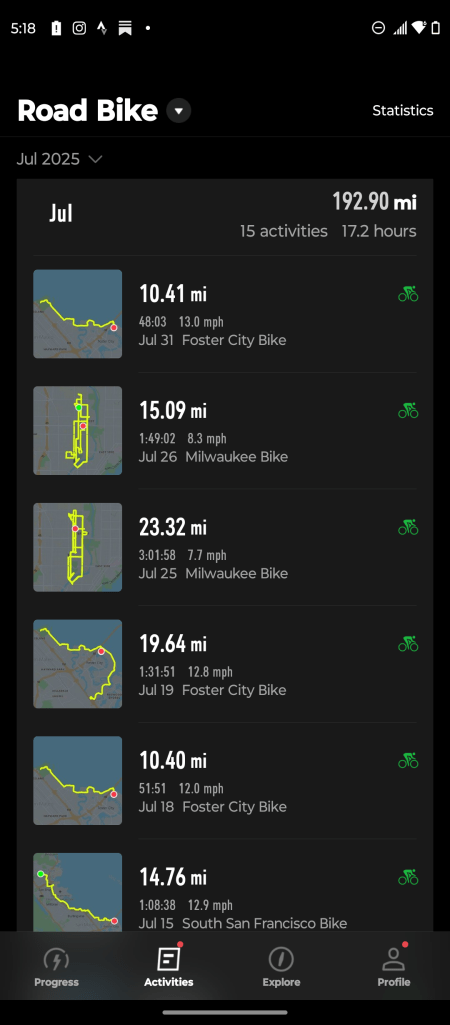
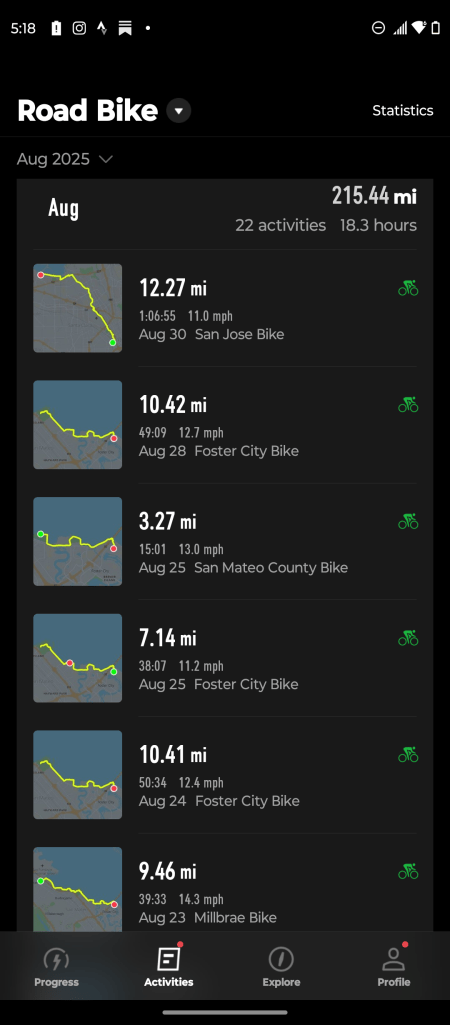
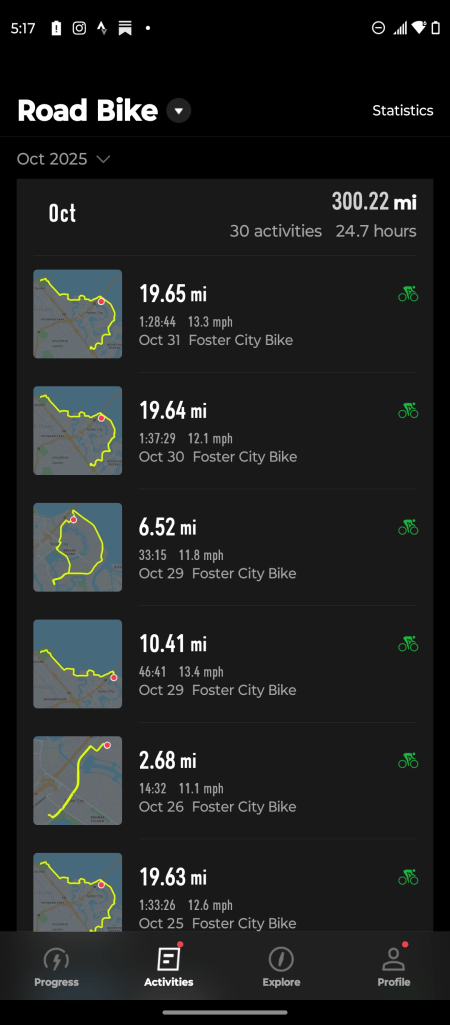
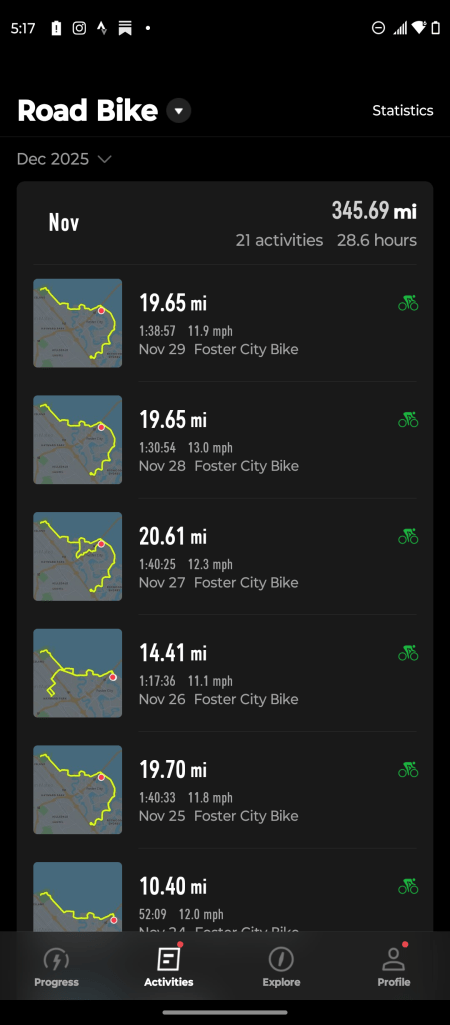
A year ago, my Coros smart watch showed more than 1,000 bicycling miles for 2024. I figured I could double that figure in 2025, but did not call it a goal.
Midway through this year, taking stock of my future, I saw value in setting a minor Yoda goal. I needed exercise and focus. Coros said I had pedaled 664.81 miles at the end of June. So, I decided out loud to go for the goal of 2,000 miles by the end of the year.
Spoiler alert: I achieved that on December 10. More importantly, I (re)learned:
Show up. Vince Lombardi said, “The harder you work, the harder it is to surrender.” That quotation covers many facets of work ethic, including the importance of showing up. Some days it was three miles. Others, it was 30 miles. The most in a single day was 50.82. The more you show up, the more likely you will keep showing up.
Choose a goal that is fun to pursue. That is tied to privilege. If you have that choice, use it. Otherwise, your goal is just a grind. A challenging goal will be a grind anyway, but if it’s only a grind, it’s easier to quit.
Select a goal within my control to achieve. Neither making the basketball team nor gaining the job promotion qualified. Cycling 2,000 miles did, barring injury or catastrophic weather.
Speaking of weather, ride rain or shine. Don’t ride through the kind of storm that can cause sickness or injury that keeps you from your long-term goal. Otherwise, enjoy a little drizzle, which is pleasant, and on sunny days, ride more to save up miles for a rainy day.
Find outside sources of inspiration. My family, Spotify, and Haruki Murakami helped. This blog post could easily be called What I Talk About When I Talk About Bicycling.
Eyes on the prize and also the horizon. While cycling I focused on feeling, on safety, and on the bike’s condition. (I made part of a worn-out chain into a bracelet to wear as a talisman. Let me know if you want an authentic bike chain bracelet.)
Along the Bay Trail and its horizon I also focused on bone-white egrets, blue herons, starling murmurations, pigeons, ducks, geese, gulls, vultures, red-winged blackbirds, and red-tailed hawks, plus recurrent sightings of a coyote I called Monte Diablo after the name of the street that dead-ends into the trail where he sat on his haunches.
The short view and the long view are both integral to any semblance of success.
Keep receipts. They will remind you of the value of setting and achieving goals.
You’ve probably heard “6-7” and wondered what it meant. Now that “6-7” has hit mainstream media, its meaning may not even matter.
After all, Dictonary.com issuing a press release about “6-7” as the word of the year for 2025 means it’s just a matter of time before the kids who made “6-7” famous stop saying it. Still, the meaning of “6-7” is not clear, so I went straight to the source.
As a contracted enrichment teacher with Grasshopper Kids, I lead writing workshops for fourth-and-fifth-graders at San Francisco’s Lakeshore Alternative Elementary School. One of my prompts this week was to write about the meaning of “6-7.”
After cheers of enthusiasm for the assignment and students sharing the trademark chorus and hand choreography of “6-7” they got down to work. Here are some of the results.
This classroom experience exemplifies the Inkflow Communications approach of embedding as a journalist with each client. Working this way with the Lakeshore students keeps me young.
Boxing has fascinated me since the Rumble in the Jungle. Muhammad Ali’s 1974 defeat of George Foreman in the city then known as Kinshasa, Zaire showcased supreme athleticism and an inspirational example of what we can endure in pursuit of our goals.
That event impressed upon me the sociological significance that sport can carry. Ali’s victory capped a morality play centering countercultural characters, civil rights, and war and peace. These influences infuse my career and my value system.
So, it was a no-brainer “hell yes” when my occasional sports-and-society collaborator Carolyn Sideco invited me to Sentro Filipino last Saturday for a Community Gathering and the book launch of Bernard James Remollino’s Pancho Villa: World Champion, 1923.
“This is not a boxing book,” reads the first line of Bernard’s introduction, and this event as a whole was not a book launch. Instead, the environment and proceedings embodied these second and subsequent lines from Bernard: “This is a history of resistance to U.S. empire made possible through the pugilistic performances of a Filipino fighter whose movements, labor, and cultural capital were intertwined with transpacific racial regimes in the early twentieth century.”
Although the book’s nominal subject, Francisco “Pancho Villa” Guilledo, gained fame as the flyweight world champion, this is a heavyweight book. It weighs in at just 154 pages of narrative but comes out swinging and packs a punch.
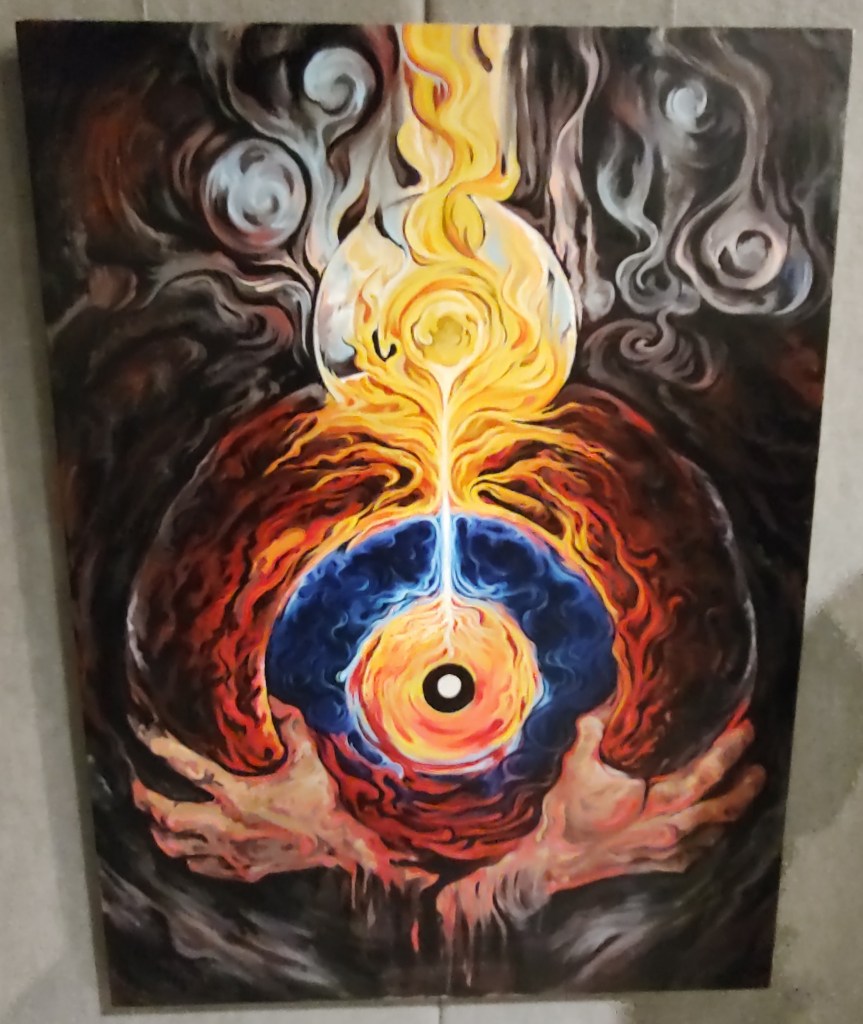
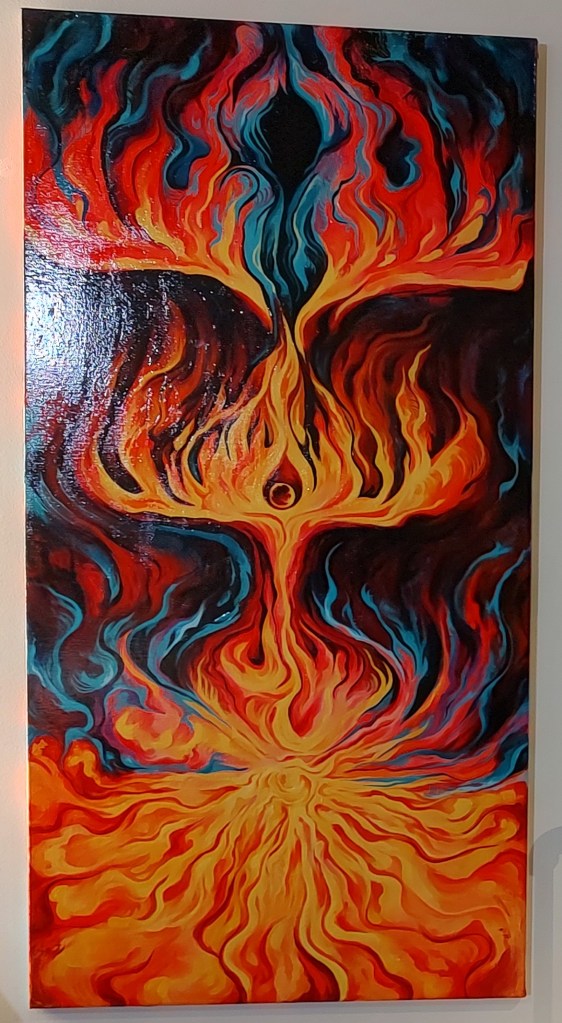
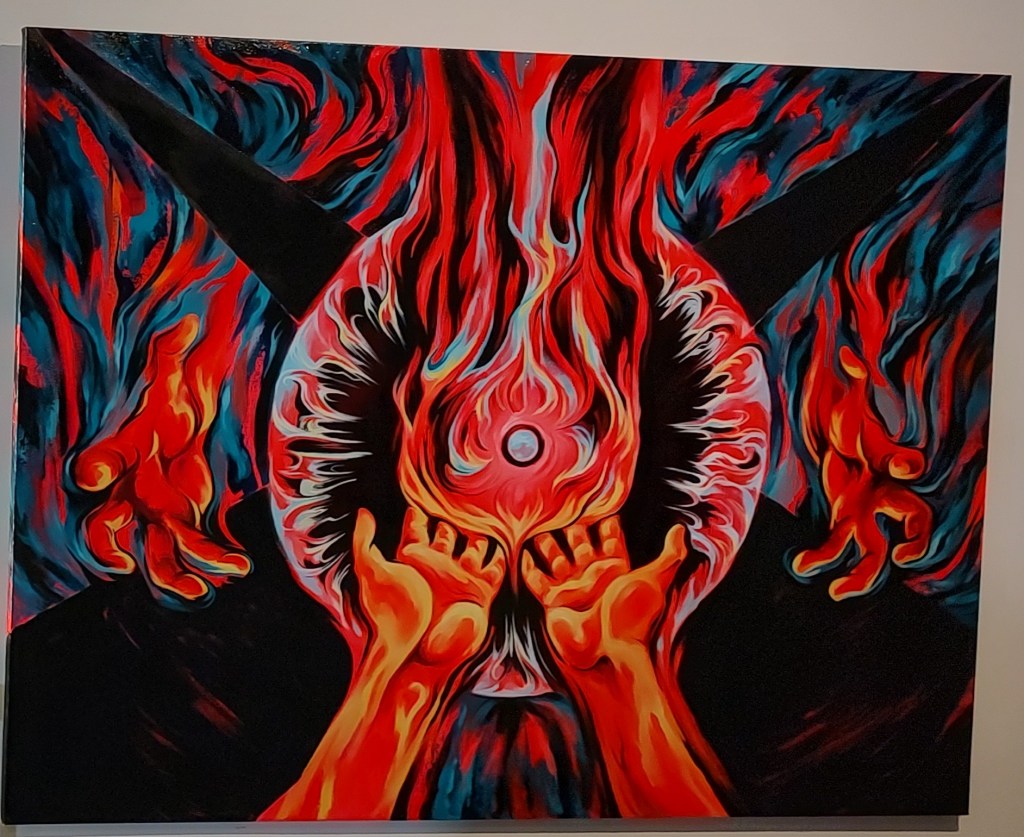
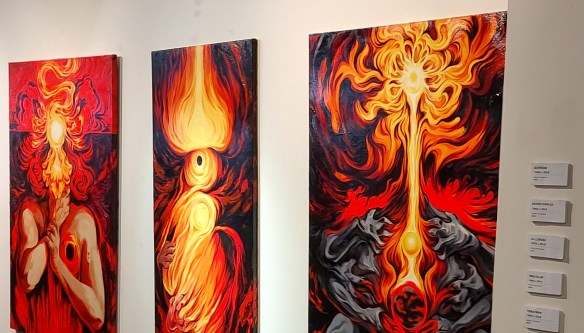
Likewise last Saturday’s event. Sentro Filipino’s venue anchors SOMA Pilipinas, San Francisco’s Filipino Cultural Heritage District. Stairs from the lobby lead to a room of about 2,000 square feet, rich with dark wood and complementary lighting that flatters the displays, such as these paintings by Tanza Solis (@manyhandscreative).
The art and artifacts throughout the space were fire, and so was the food by Chef Alex Suniga (@masarapthehomie).
Those wings fell off their bones, and the taro leaves in coconut were to die for. Chef Alex spoke movingly from the podium about deepening ties to his Filipino heritage through his cooking. Representatives of the many community organizations in attendance sprinkled their speeches with Tagalog while promoting their causes focused on health, education, immigration, and other current issues.
Then came the main event. In honor of launching a book about a boxer that is not a book about boxing, the presenters used a boxing theme. Carolyn and Bernard each introduced themselves Michael Buffer style (Carolyn “standing four feet, ten inches and weighing in at 135 pounds thanks to these calves given to me by the ancestors…”), with a few obviously comic riffs, but also the highlights of their impressive CVs.
Carolyn’s interview of Bernard ran deep into the significance and seriousness of his subject, while also inciting audience participation in shouting between “rounds” of questions “ding, ding, ding” to imitate a ringside bell. She pulled people from the audience to carry Bernard’s book over their head, sashaying like the between-rounds “ring card girls” at a boxing match.
To reveal more of their conversation would spoil the reading experience. Suffice it to say that learning how the life of Francisco “Pancho Villa” Guilledo inspired and empowered his Filipino contemporaries raised the room’s temperature.
Fever pitch followed when rapper Power Struggle performed, including his song Allegory of the Underdog, which he wrote about the boxer in support of Bernard’s book.
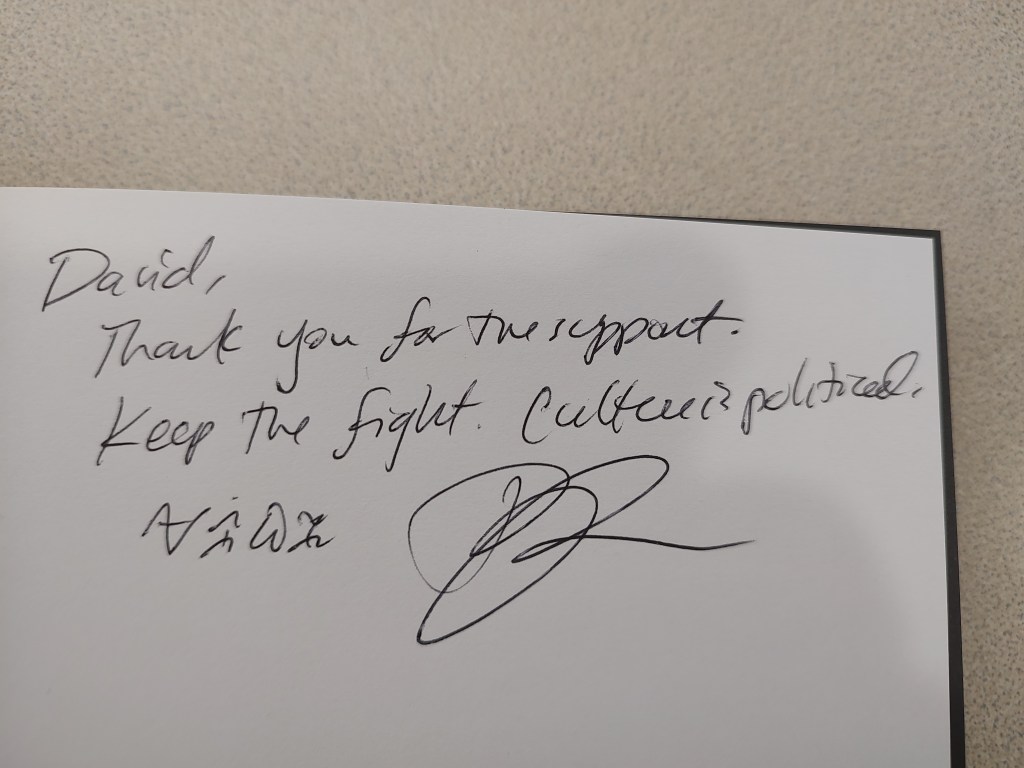
Leaving Sentro Filipino all fired up, I read the book the next day. Bayani Art made it beautifully, with strong binding, heavy stock, remarkable archival photography, and of course, Bernard’s thought-provoking words. Especially these handwritten ones that evoked a throughline back to my initial awe at Muhammad Ali.
Weeks before Riverwest 24, Instagram inspiration came from one of my favorite coaches, Ted Gustus. He posted, “We don’t stop playing because we grow old, we grow old because we stop playing.”
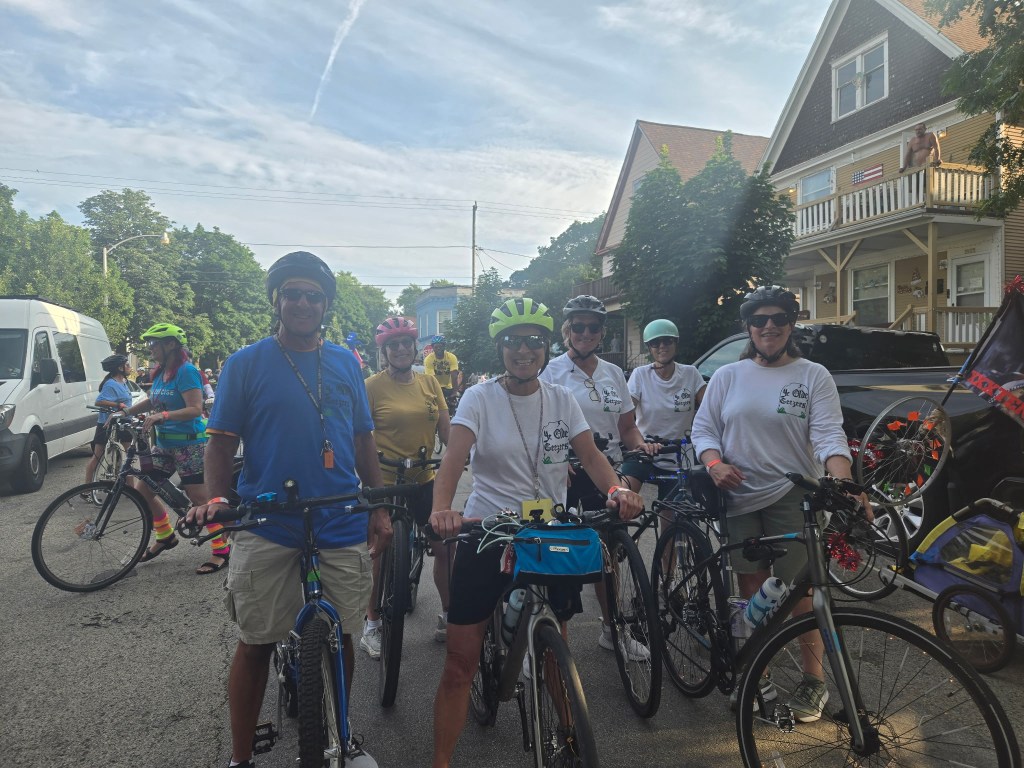
Coach borrowed the quote from George Bernard Shaw, a fascist bastard with no claim to anything reminiscent of Riverwest 24, aka “The People’s Holiday.” And the quote rings true for all who rode with our team, “Ye Olde Geezers.”
Ye Olde Geezers at the starting line (from left, myself, Brenda, Carol, Pauline, Colleen, and Molly) sport team T’s created by Molly’s niece, Laura
Nice of Laura to remind us who was riding behind us all the way
A year older since my first round-the-clock ride around the Riverwest neighborhood of Milwaukee, in 2025 I would rely more on experience and less on the sheer athleticism that carried me through the 2024 event. The 4.6-mile route changed slightly from the previous year due to road repairs, but the rules and spirit remained the same.
The rules, in short: Despite a “suggested route,” riders can roll any way they want, accruing completed laps by passing through each of the four checkpoints, in order, and having their team manifest stamped. Manifest punches gained by visiting fun and quirky “bonus checkpoints” add to a team’s total. The spirit, in short:
We six teammates who officially registered for the ride, lasting from 7 p.m. Friday July 25 to 7 p.m. July 26 spent our Friday afternoon together, along with my daughter, Eleni, an unofficial special guest rider. We first walked from Molly’s apartment, aka “Ye Olde Geezers” HQ, to check in at RW24 HQ and pick up our wristbands and bonus checkpoint passports.
Back at Molly’s, we set up a caprese sandwich assembly line and drank beer in the heat while watching the Dead Man’s Carnival circus troupe set up their stage on the street below Molly’s balcony. We charged headlights and taillights, tested brakes, and called each other Geezers whenever anyone lost or forgot any equipment. Eleni tuned up the second-hand Bianchi touring bike she lent me and did such a good job that she almost got the rear tire to stop rubbing the frame.
Around 6, we left for the pre-ride vegetarian dinner served at communal tables on the street outside the Riverwest Co-Op. There, the merriment escalated. Tall bikes rolled through the crowd, passing costumed riders, such as a circa-Mad Men flight crew complete with pillbox hats, and un-costumed riders who risked sunburn on their most sensitive appendages.
After dinner, the throng packed as closely as possible to the starting line. Bike bells chiming in anticipation were drowned by a confetti cannon boom that signaled the start. The going was so slow that we snuck in just a couple laps before returning to Molly’s balcony to watch Dead Man’s Carnival.
As the carnival wound down and thousands of fans dispersed, Eleni planned to ride with Carol’s daughter, Julia, and her friends. They named their crew, of course, “Young Geezers.” Then, Molly explained what else was about to take place while she and Colleen went downstairs to Art Bar for the underwear party.
Carol took off before I did. Holding our team manifest, only her lap count and bonus checkpoints mattered. I would catch up with her whenever I could, relying on text messages to locate each other. Meanwhile, I rode the course randomly, entranced by sights like this:
Carol’s text came in: “Meet at start?” So we did. Carol, Pauline, and I took a lap, bombing downhill on Humboldt Ave. through the soft, humid night to Water St., then over the Marsupial Bridge and winding up the switchback at Kadish Park with the downtown skyline in the distance.
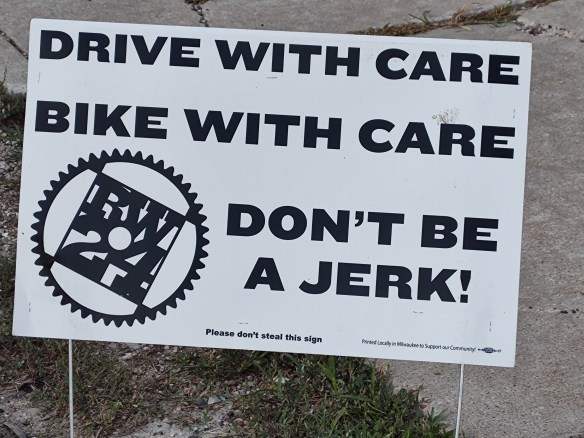
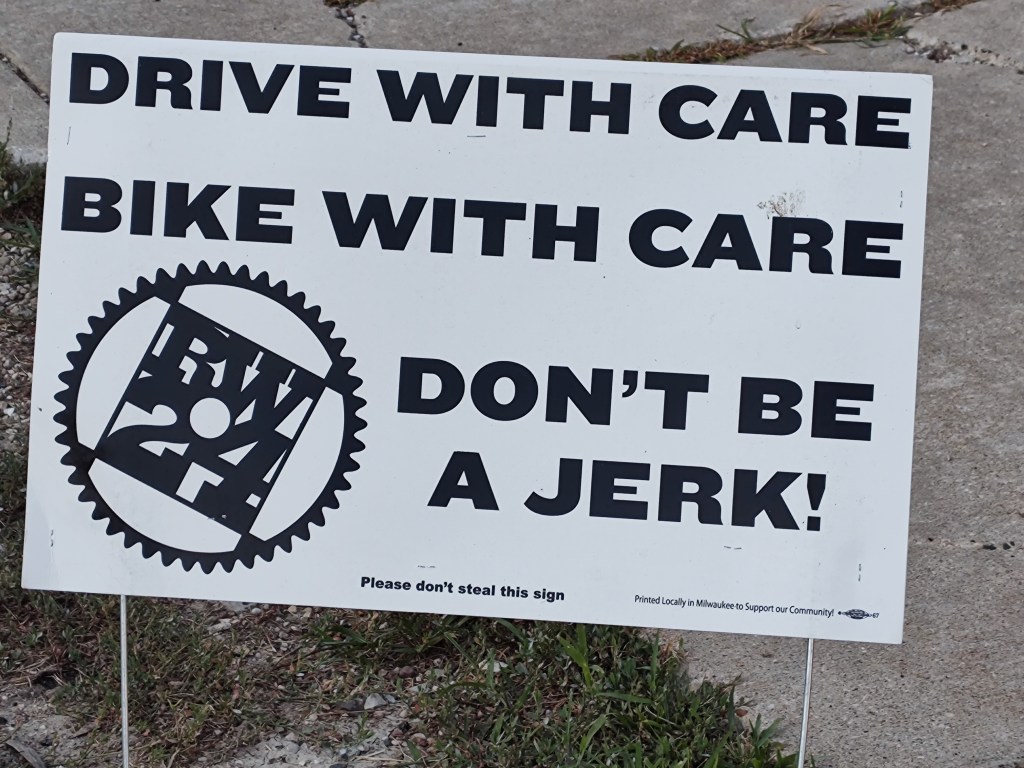
Atop the switchback, a sign spoke truth to us.
With burning passion and burning thighs, Ye Olde Geezers hit the dance floor at this bonus checkpoint named Marvelous Michelle’s Mostly Midnight Mayhem and Menashery. Here is the Marvelous part:
And here is the mayhem:
It may not seem like it, but I was having a great time. I was just too tired to smile.
We decided to skip the Mud Wrestling bonus checkpoint, because at 1 a.m., the line was too long. We lost Pauline somewhere. Or maybe she called it a night. Our next bonus checkpoint stop was First Practice. Those of us in line were led five at a time down a set of stairs into someone’s basement to play musical instruments as loudly as possible for two minutes. Carol gave her keyboards a Jerry Lee Lewis treatment, and Mark Knopfler might have said I was “banging on the bongos like a chimpanzee.”
Last stop before I headed in at about 2:30 was the bonus checkpoint called Leave Your Tennis in Shorewood, which turned out to be a glow-in-the-dark pickleball game at the Pumping Station Park. After 23 miles of cycling and about three points of pickleball, my Geezer knees were not having it.
I rode back to team HQ for a nightcap of caprese sandwiches and beer that helped me wind down enough to sleep from 3 to 5. One challenge of Riverwest 24 is that you suffer FOMO even in your sleep. Two bonus checkpoints opened and closed in those two hours!
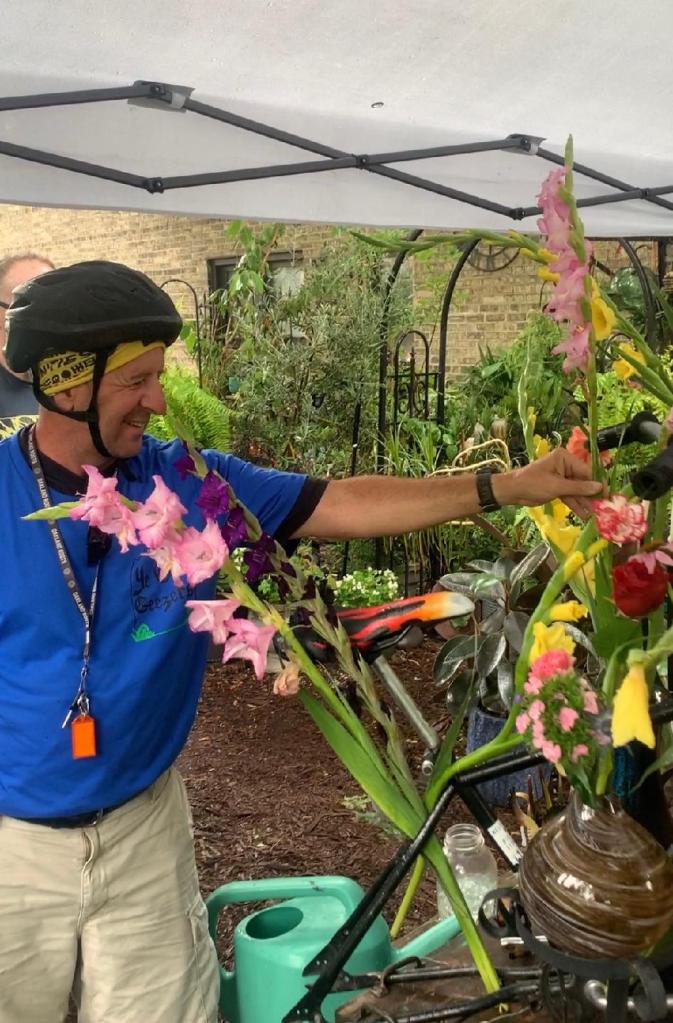
Rain that didn’t let up until 9 kept all of us off the course except Carol, who never sleeps during the 24 hours and rarely stops riding. Once Ye Olde Geezers hit the streets in full effect, our first bonus checkpoint was Peddle Pedal Petal Power at the Riverwest Grown plant shop, where I “planted” a gladiolus for Val in the community garden.
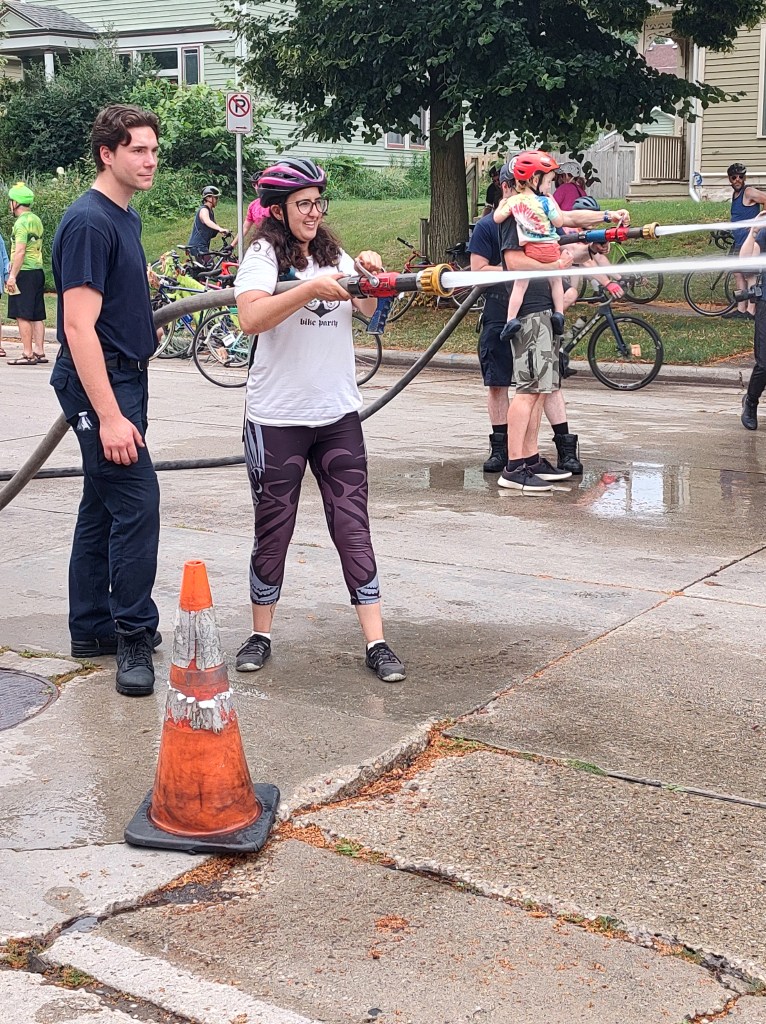
Next was Take Off You Hoser!!! at Milwaukee Fire Station 21. Eleni and I took turns spraying targets, which was way more fun than I ever imagined, and got me thinking maybe I should have stuck with my first career aspiration instead of this one.
To re-assemble Ye Olde Geezers, we met at the Kids 24 ride where Molly and Colleen were volunteering.
A raucous rock band, a thousand or so kids all more mature than Molly but somehow under her supervision, and shaving cream pies…what could go wrong?
Soon, but never soon enough, it was time to hit Black Husky Brewing for a traditional Milwaukee brunch of Bloody Mary and beer and a Ye Olde Geezers strategy planning meeting. Having taken leave of our senses, we agreed with Carol that we should set a team record of 21 laps by the end of the ride.
We started slowly by stopping across the street for the bonus checkpoint at Wu Tang Park, so named for its signature sculpture.
Then we put the hammer down, fueled by funk played at Black Husky’s live remote of WMSE’s Barry Johnson Saturday Afternoon Boogie Bang, plus other cuts covered by live bands along the route. It sounded like this:
Of course, the rest of the ride was not without its detours, mishaps, and other challenges. A little kid clipped Colleen’s back wheel on a downhill and both riders miraculously stayed upright. Not so one inebriated non-Geezer, who fell hard off her bike, and then, as her friends helped her re-mount, fell even harder.
Carol’s chain fell off on an uphill. We had to stop for free tacos. Because they were free. And they were tacos. We got caught behind the dozens of slow riders chanting for a free Palestine.
Sometimes the sun scorched. Other times the sky drizzled. My arms went numb. The last three or four laps were excruciating.
But on the last big downhill on Humboldt — where on earlier laps I pumped the brakes for stop-and-go lights or just plain fear — I hit every green. I sped like never before on a bike and felt wild and free, sure of a strong sprint across the Marsupial Bridge and laughing through the agony of the last Kadish Park switchback climb with Molly while We Olde Geezers tried to remember the name of the band that played Never Been Any Reason, which for some reason now blared from a nearby speaker for the first time since high school.
From there, all that remained was the last mile or so until the finish line of our 21st lap.
Oh, yeah, and taking our seats on the curb in front of the High Dive bar on Center St. to watch Julia’s attempt at the famous post-ride Cheese Jump.
The Young Geezer did us proud. Not surprisingly, any dares for any of Ye Olde Geezers to try that trick fell on deaf ears. However, we will again heed the call for Riverwest 24 in 2026.
Generations can be short in East Palo Alto, but legacy lasts long. That’s why hundreds of eight-to-18-year-olds sit in a dozen semi-straight lines, each line behind a coach at the Davante Adams Youth Football Camp.
They have heard the name of the NFL star all their lives. Their parents cheered Adams during the childhood they shared with him and later while watching Packers games on TV, and now the next generation is shouting, “Davante Adams! Davante Adams!”
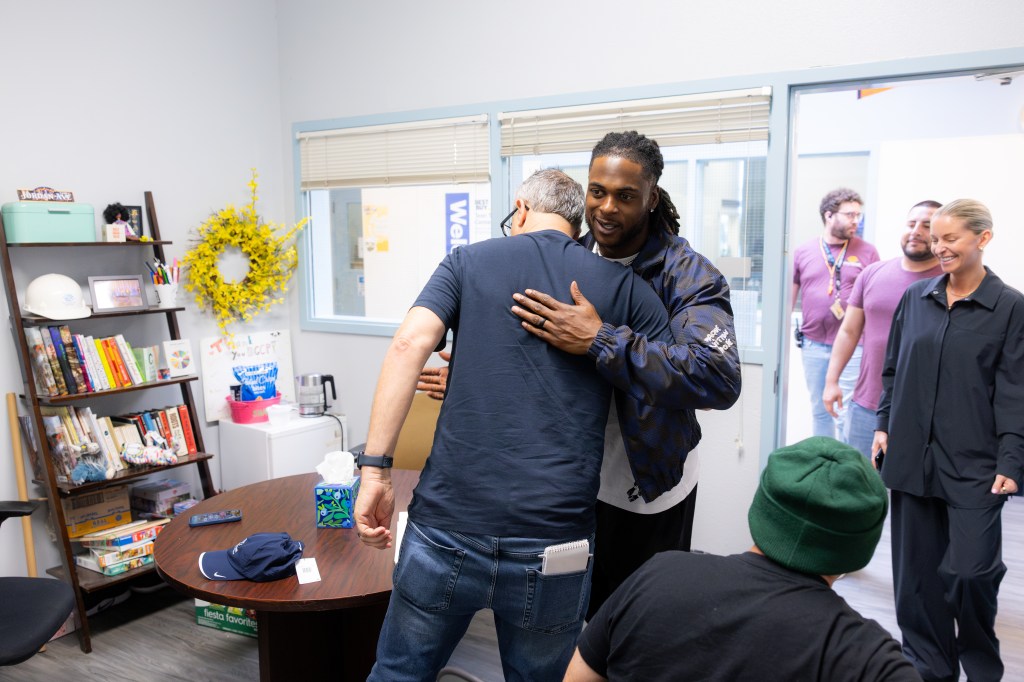
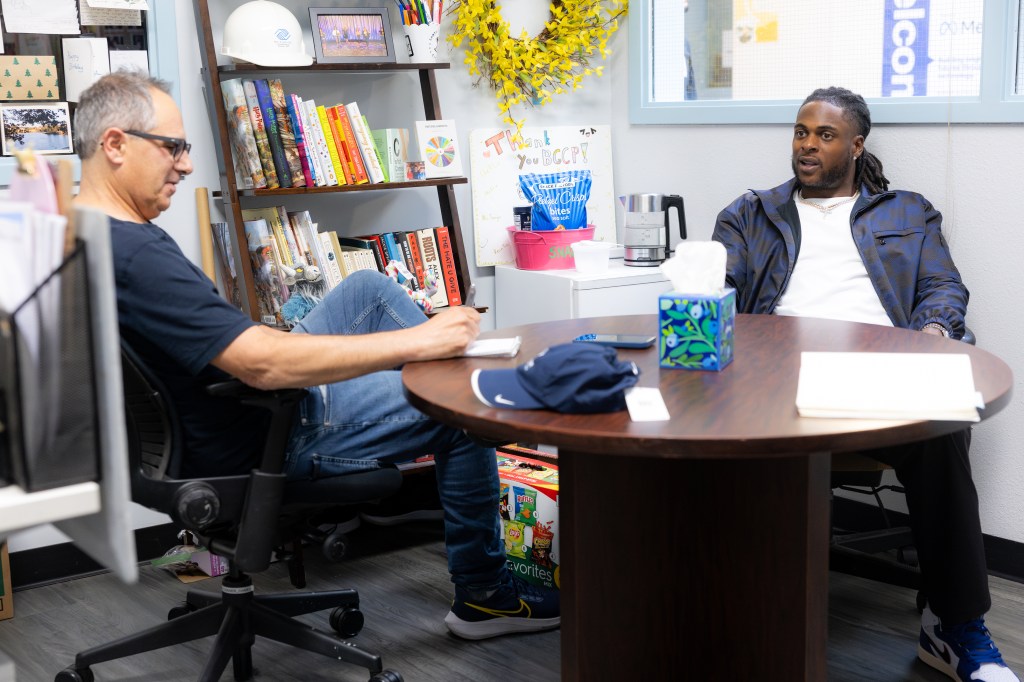
Then, their hero, their parents’ hero, takes the field and starts to slalom those lines of campers, who wait impatiently to touch greatness. Fortunately for them, Adams at age 32 maintains the 4.56 40-yard-dash speed he showed at the NFL’s 2014 Draft Combine. He had explained as much the day before in an interview with Michael Silver of The Athletic that I arranged to happen at the Boys & Girls Clubs of the Peninsula’s East Palo Alto clubhouse, which a generation ago helped cultivate Adams’ athletic ability.
Now, at the camp across Highway 101 from East Palo Alto, which notoriously divides the haves from have-nots, Adams slows to a slightly sub-4.56 pace on the immaculate turf football field of Palo Alto High School, which he led to the 2010 state championship as a starter at receiver and defensive back. Adams damn sure daps each outstretched hand in every low-five line.
With the precision of the pass patters he runs on Sundays, Adams keeps this route at just the right speed. After all, he’s just getting warmed up. He has to save some bursts for the miniature touch football games he plays with every child in camp.
And he will need more speed for the one-on-one match-ups with each player the camp coaches name as a “superstar.”
But the Davante Adams Youth Football Camp is not just about the sport. He also expends energy on encouragement (below, in the form of singing “Happy Birthday” to a camper) and the life lessons he shares with every player who comes through his station.
A Davante Adams homecoming feeds the souls of East Palo Alto. He pours into the community, just as the sweat pours off of him during four straight hours as the most active person in camp. And that Taco Bell truck in the background feeds the bellies of East Palo Alto with all the free food anyone could eat.
Generations of young fans and younger fans walk away that day fulfilled.
Those in attendance at the Boys & Girls Club clubhouse the day before had a similar experience. Even without athletic exploits and the thrill of football as a hook for teaching life lessons, Adams kept it real in this interview with Celena, winner of the club’s Youth of the Year honor.
And he did the same with me during this interaction, when work was play.
It took Molly a couple years to convince me to ride in the Riverwest 24 Hour Bike Race. Sitting on her balcony in the twilight over our glasses of red wine, Molly always made the event sound appealing for its sense of community and the unique twist of a tattoo that many riders get to commemorate their participation — a grittier, gutsier step beyond “been there, done that, got the t-shirt.”
The more Molly talked about the ride through the Riverwest neighborhood of Milwaukee, the more it sounded like a dare, the mix of athletic challenge and encouragement we’d shared since high school. But now we were 60, and the prospect of bicycling for 24 hours and getting a tattoo seemed absurd.
“You don’t necessarily ride the whole 24 hours,” Molly explained. “You get off the bike for checkpoints, where you can drink a beer or have a community experience in one of the shops or in people’s homes. Some people sleep or trade off shifts with their teammates. It’s not competitive.
“And, you don’t have to get the tattoo” she said with a smile that looked more 16 than 60. “But you know you want to.”
OK. Sold. Which is how we got here.
At the start just in front of Molly, backed by (L. to R.) Maureen, Carol, Brenda, and Colleen, members of Team Millio Zillio.
In the seconds before the 7 p.m. start of the Riverwest 24 on July 26, 2024, roughly 1,800 registered riders are a mass of nervous energy, ringing bells to signal they’re ready to roll.
At the start, cyclists surge forward. Then they stop. The crowd condenses. Sardined in the street with at least 1,800 riders of various ages, abilities, and levels of patience and competitiveness, it suddenly seemed a lot could go wrong. Less than a week after Milwaukee hosted the Republican National Convention, hair trigger tempers remained as hot as the air temperature.
Plus, the Riverwest 24 coincided with the Milwaukee Air & Water Show, featuring the U.S. Air Force Thunderbirds, and the Harley-Davidson Homecoming, bringing thousands of riders new to Milwaukee’s streets, who were bound to be frustrated by bicycle traffic. The threat and promise of sonic booms and backfires jangled nerves.
With scant police presence assigned to our ride, our community would police itself. Fortunately, Riverwest 24 organizers guided us with simple reminders.
Gradually, riders spread throughout the 4.6 mile course. Speedsters sped. We in the “Elder” category that Molly signed us up for did not.
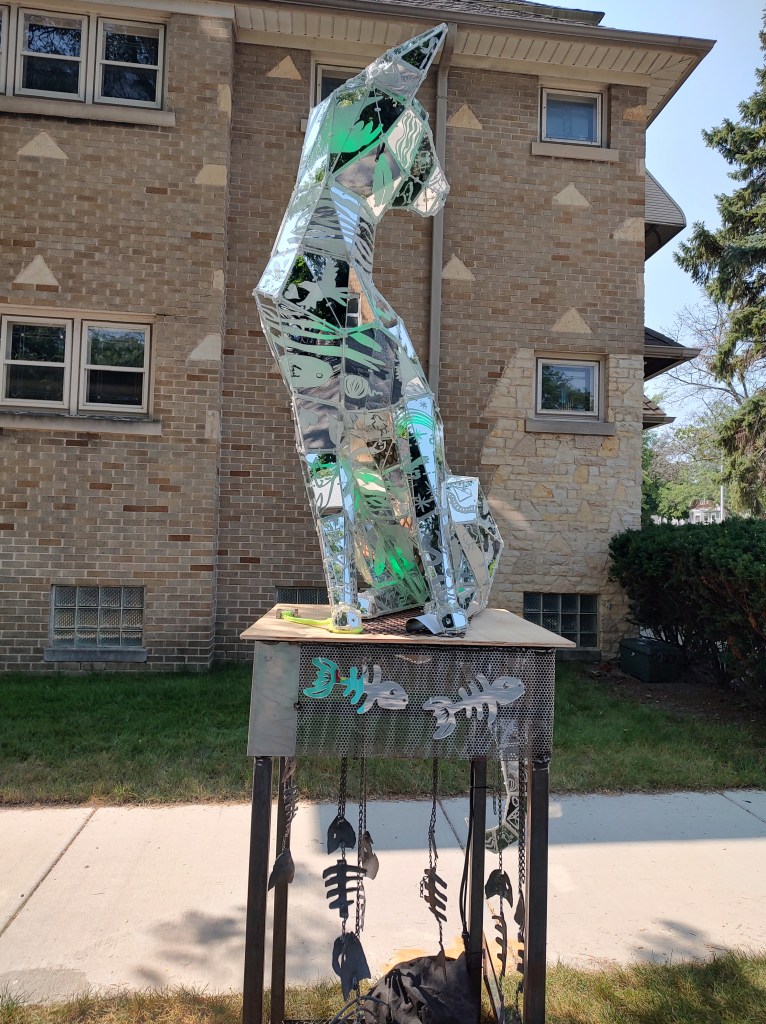
Instead, we enjoyed high-fiving the little kids lining the residential streets in front of their parents’ homes or shade tents standing curbside. We basked in their cheers and encouragement, laughed at humorous handmade signs, and admired artwork scattered throughout the route.
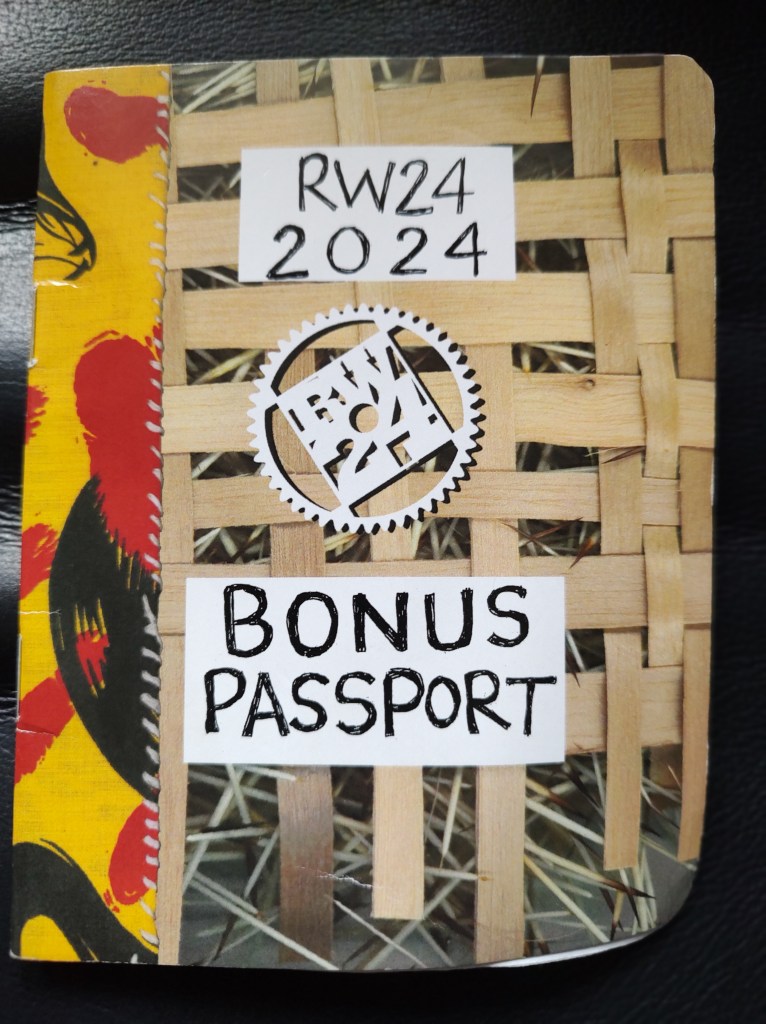
Occasionally, we stopped at “bonus checkpoints” to get our “passports” stamped, earning points in addition to those for each completed course lap.
The bonus checkpoints brought us into homes, businesses and parks, where we participated in cleverly named non-cycling activities. For example, “Don’t Pull a Hammy” provided a stretching session inside the cavernous Dropout Fight Club boxing gym, and “Let the Rhythm Move You” at Wu-Tang Park offered a group belly dancing lesson.
From about 9-11 p.m., we took a break from our bikes to watch a street circus from Molly’s balcony.
Then, just Carol and I ventured back out for more laps and checkpoints. The laps led us past pulse-pounding street parties, live bands, DJs, drunken revelry, and all the rest of the eclectic energy that marks the Riverwest community.
My favorite checkpoint was “A Night at the Museum” in the Jazz Gallery Center for the Arts, housed at the old Jazz Gallery performance space, where, as a high school senior, I watched Art Pepper play alto just weeks before he died. While Carol perused the Riverwest 24 memorabilia display, I got lost in the jazz artifacts and a recording of the late great Milwaukee jazz radio DJ Ron Cuzner and was transported back to 1982.
Other checkpoints reflected the quirkiness of the Riverwest community. “What Are You Buying? What Are You selling?” featured a masked and hooded man inside a candle-lit tent on the Beerline bicycle trail, who mutely helped us discern how to complete a transaction for a vial of “potion” that turned out to be an ounce of kombucha. In someone’s basement we threw darts at balloons for a chance to win a container of Cup Noodles ramen. By 2:30 a.m., I needed off the streets with about 23 miles behind me.
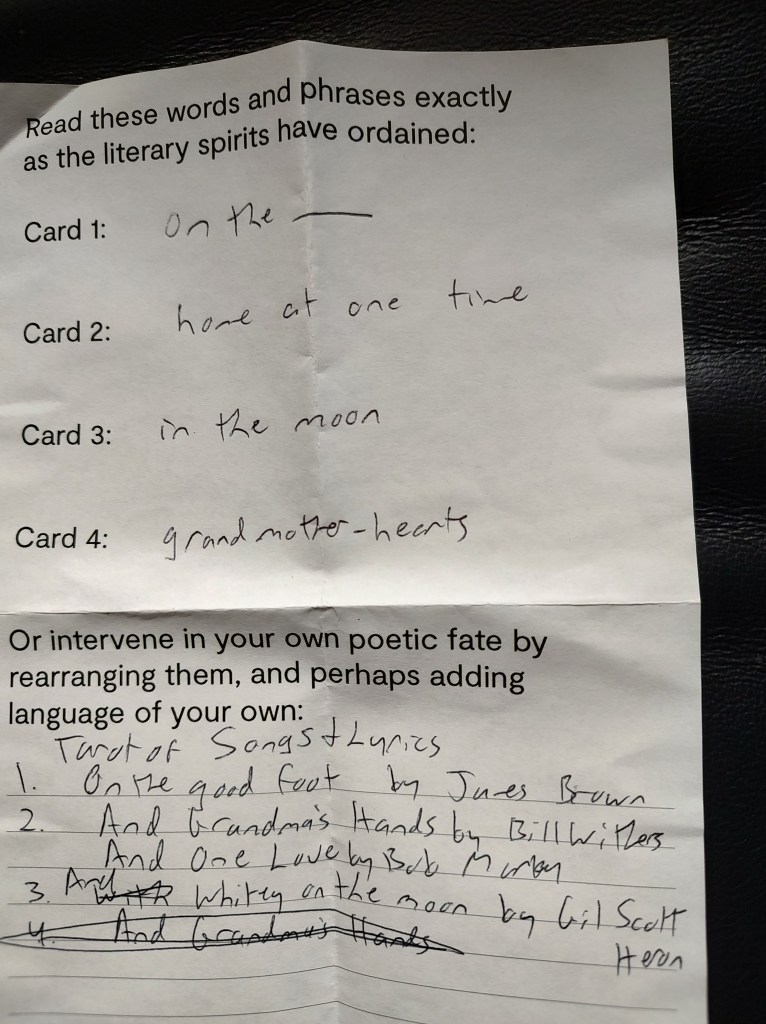
I slept from 3-6 a.m. By 7, I was back out on the bike for the day’s first bonus checkpoint. “Poetry Tarot” occurred at Woodland Pattern, an independent bookstore that sells my book Az Der Papa. To get my passport stamped, I sat for a turn of tarot cards with random phrases that I was told to transcribe, edit into a new piece of writing, and read aloud on the mic to whoever was in the street.
Our Team Millio Zillio group text re-convened us at Woodland Pattern, where we planned a strategy to help our team complete a total of 20 laps before the race ended 12 hours later. Through a comedy of flat tires, needing to meet teammates’ delightful adult children at various checkpoints, and wanting a traditional Milwaukee brunch of Bloody Mary, we rode — sometimes alone and other times together — until an appointed stop at “The Pride of Milwaukee” checkpoint, which opened at noon at Black Husky Brewing.
Damn good Bloody Mary served Wisconsin style with a chaser of pilsner brewed onsite and damn fine company as we ran into old high school buddy Mike D’Amato (not pictured).
From there, we ground through laps to get our goal in the 82-degree heat, amid the cacophony of Harleys and Air Force jets, surrounded by swarms of competitive cyclists. We were sleepy and sore, but fueled by free food at one of the checkpoints and soaked in sweet relief by sprinklers and squirt-gun toting curbside kids. The Riverwest community rallied around us and kept us going.
By about 6 p.m., we finished our 20th lap. Riverwest 24 officials at the final checkpoint punched the last hole in the second page of our official race manifest.
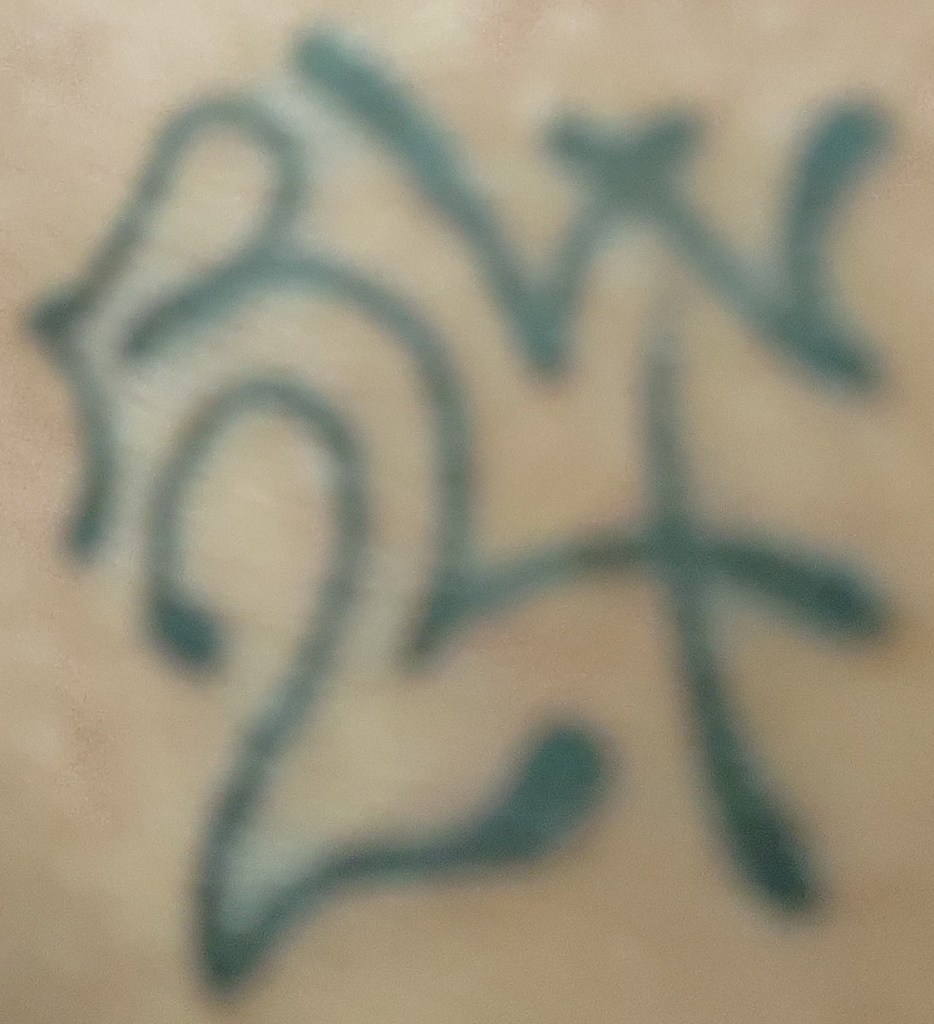
We rode to our 6:30 tattoo appointments at Falcon Bowl, established 1915. We waited at the bar, replenishing our precious bodily fluids and building our courage until it was time to climb the narrow staircase in stifling heat to an office space/tattoo parlor. For about five minutes and with minimal pain, we permanently commemorated our ride, earning the bonus points that put us in a 7th-place tie on the leaderboard among 19 teams in the Elder category.
Our most important business complete, we rode back to the finish line, just as the race officially ended, satisfied with these stats.
We sat on the patio of Club 99, watching people take turns launching their bikes off the ramp at the Cheese Jump.
Over our last beers of the Riverwest 24, we swapped stories of our own adventures and gratitude for the community commitment it took to manage 1,800 riders and untold numbers of spectators, from the top echelon of organizers to each and every volunteer pool noodler who directed traffic over the previous 24 hours, keeping us safe, sane, and supremely satisfied with our experience.


















 inkflowcommunications.com