

Boxing has fascinated me since the Rumble in the Jungle. Muhammad Ali’s 1974 defeat of George Foreman in the city then known as Kinshasa, Zaire showcased supreme athleticism and an inspirational example of what we can endure in pursuit of our goals.
That event impressed upon me the sociological significance that sport can carry. Ali’s victory capped a morality play centering countercultural characters, civil rights, and war and peace. These influences infuse my career and my value system.
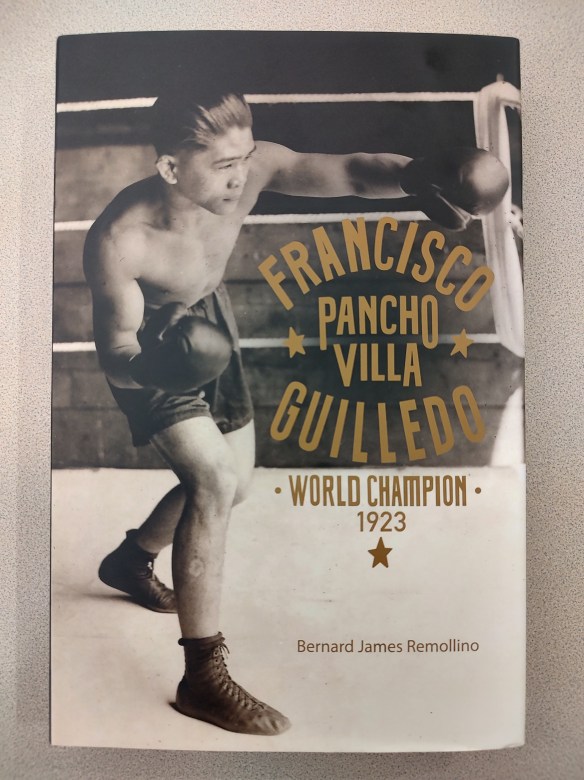
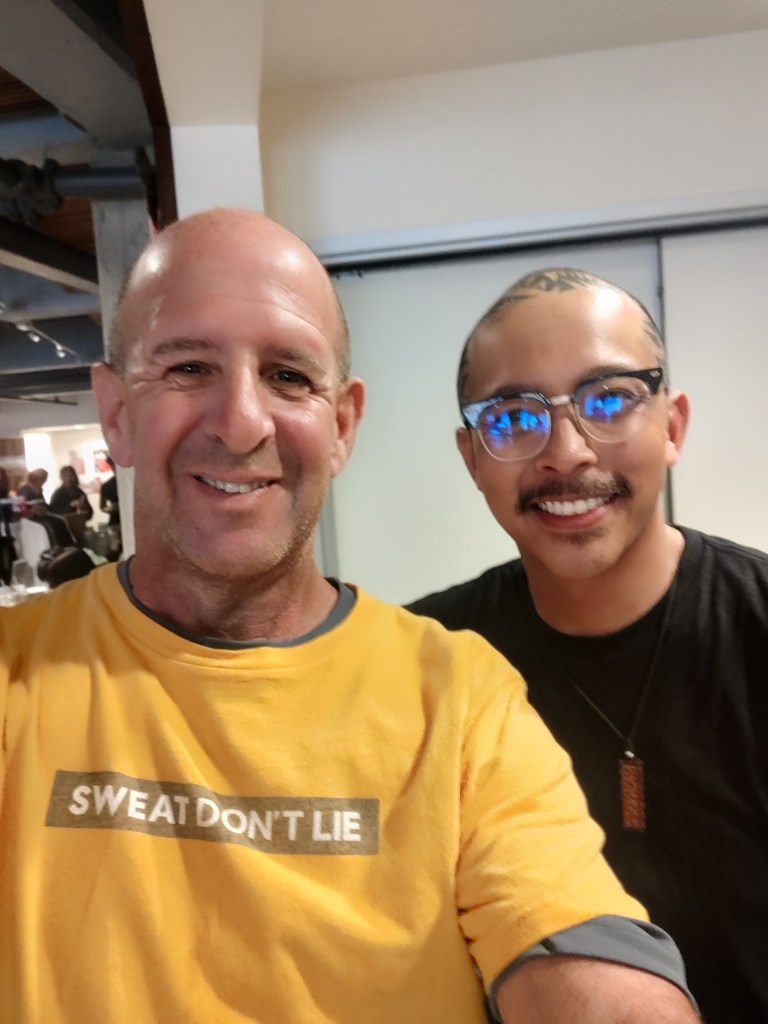
So, it was a no-brainer “hell yes” when my occasional sports-and-society collaborator Carolyn Sideco invited me to Sentro Filipino last Saturday for a Community Gathering and the book launch of Bernard James Remollino’s Pancho Villa: World Champion, 1923.
“This is not a boxing book,” reads the first line of Bernard’s introduction, and this event as a whole was not a book launch. Instead, the environment and proceedings embodied these second and subsequent lines from Bernard: “This is a history of resistance to U.S. empire made possible through the pugilistic performances of a Filipino fighter whose movements, labor, and cultural capital were intertwined with transpacific racial regimes in the early twentieth century.”
Although the book’s nominal subject, Francisco “Pancho Villa” Guilledo, gained fame as the flyweight world champion, this is a heavyweight book. It weighs in at just 154 pages of narrative but comes out swinging and packs a punch.
Likewise last Saturday’s event. Sentro Filipino’s venue anchors SOMA Pilipinas, San Francisco’s Filipino Cultural Heritage District. Stairs from the lobby lead to a room of about 2,000 square feet, rich with dark wood and complementary lighting that flatters the displays, such as these paintings by Tanza Solis (@manyhandscreative).
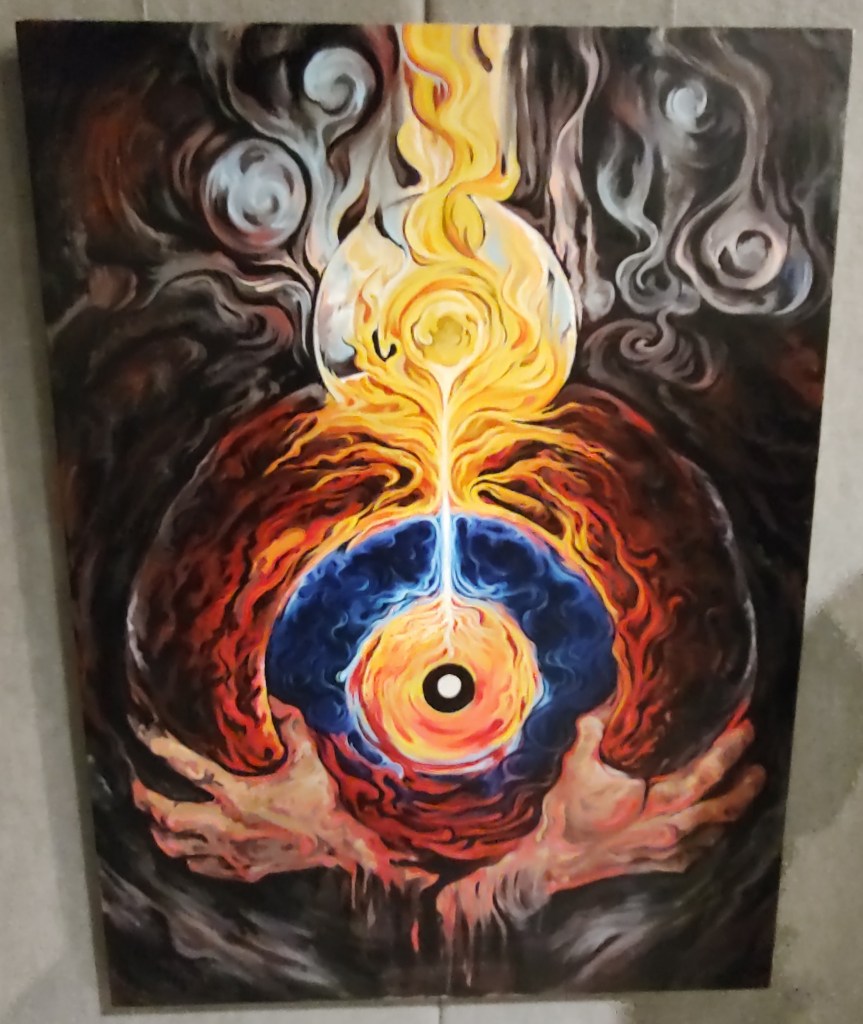
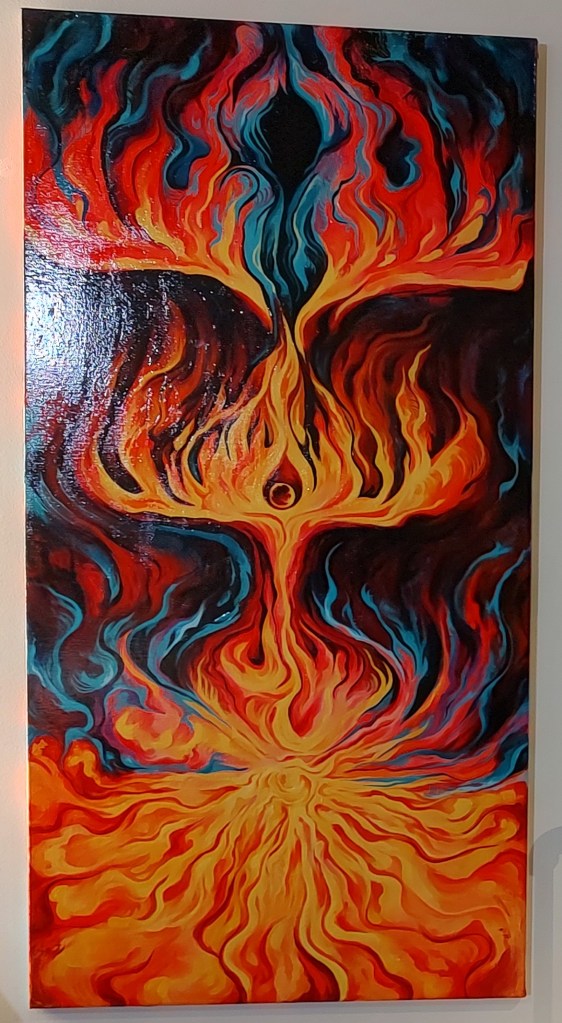
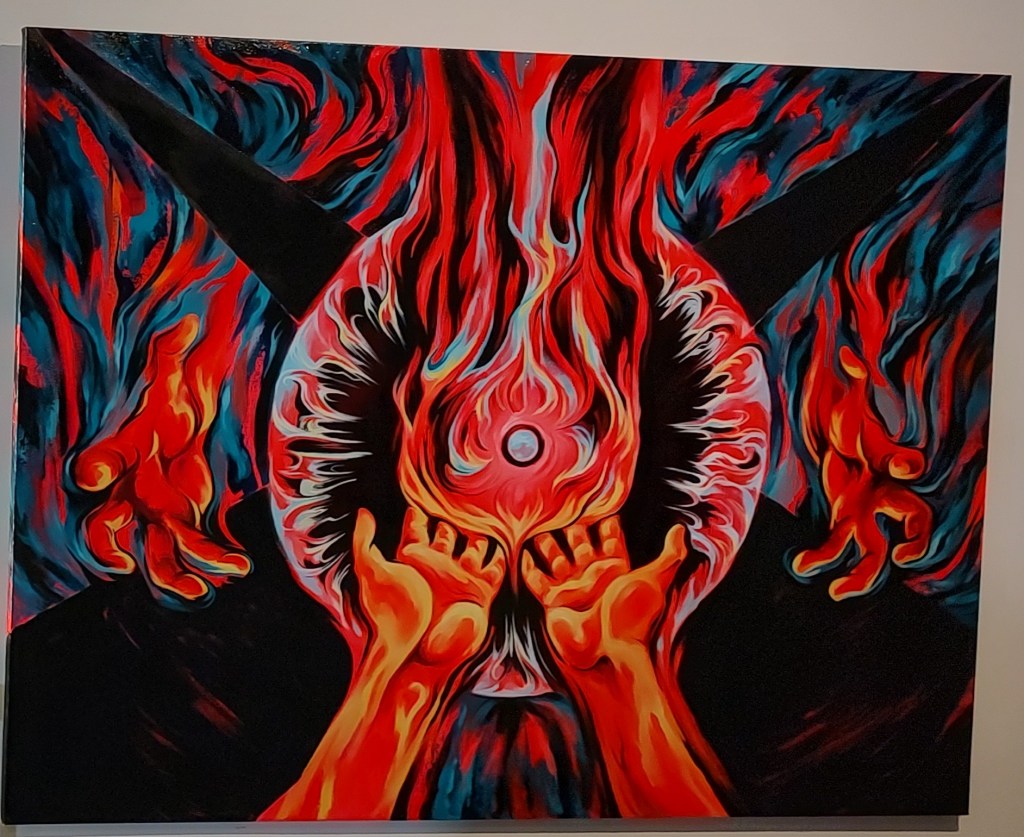
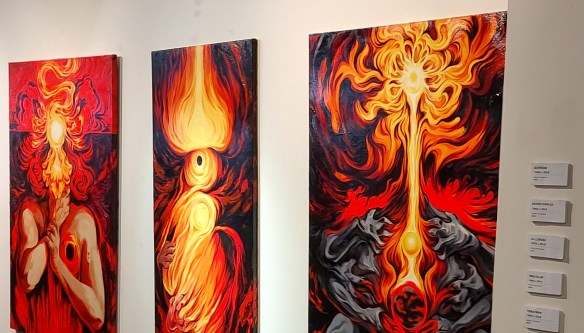
The art and artifacts throughout the space were fire, and so was the food by Chef Alex Suniga (@masarapthehomie).

Those wings fell off their bones, and the taro leaves in coconut were to die for. Chef Alex spoke movingly from the podium about deepening ties to his Filipino heritage through his cooking. Representatives of the many community organizations in attendance sprinkled their speeches with Tagalog while promoting their causes focused on health, education, immigration, and other current issues.
Then came the main event. In honor of launching a book about a boxer that is not a book about boxing, the presenters used a boxing theme. Carolyn and Bernard each introduced themselves Michael Buffer style (Carolyn “standing four feet, ten inches and weighing in at 135 pounds thanks to these calves given to me by the ancestors…”), with a few obviously comic riffs, but also the highlights of their impressive CVs.
Carolyn’s interview of Bernard ran deep into the significance and seriousness of his subject, while also inciting audience participation in shouting between “rounds” of questions “ding, ding, ding” to imitate a ringside bell. She pulled people from the audience to carry Bernard’s book over their head, sashaying like the between-rounds “ring card girls” at a boxing match.
To reveal more of their conversation would spoil the reading experience. Suffice it to say that learning how the life of Francisco “Pancho Villa” Guilledo inspired and empowered his Filipino contemporaries raised the room’s temperature.
Fever pitch followed when rapper Power Struggle performed, including his song Allegory of the Underdog, which he wrote about the boxer in support of Bernard’s book.
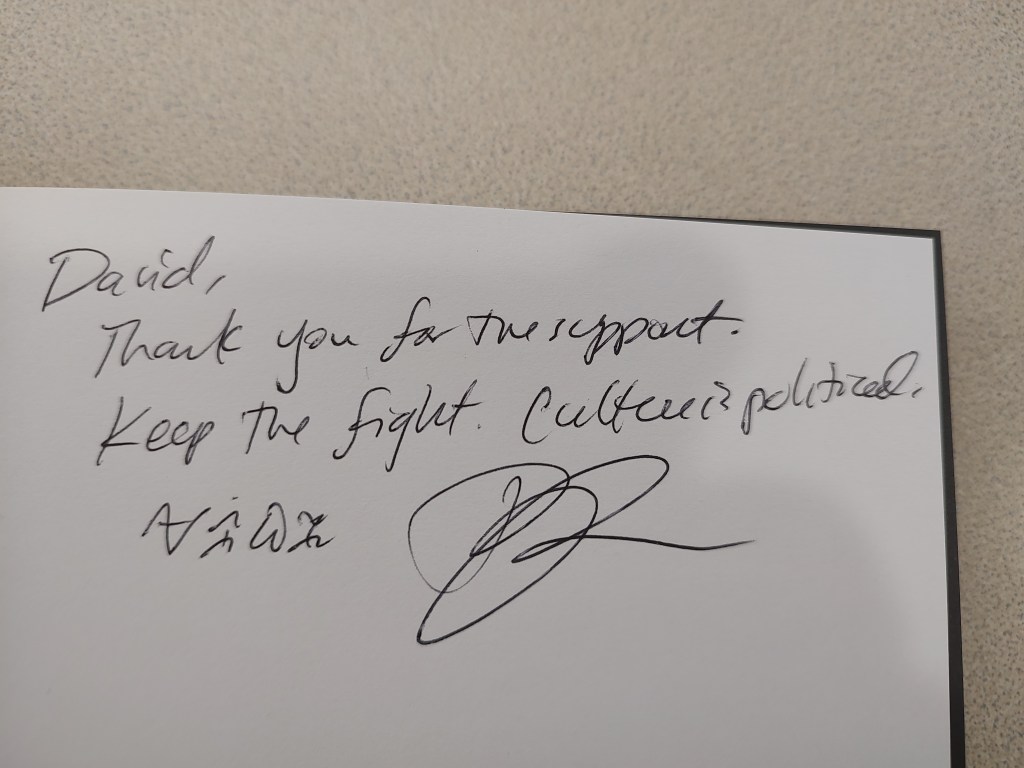
Leaving Sentro Filipino all fired up, I read the book the next day. Bayani Art made it beautifully, with strong binding, heavy stock, remarkable archival photography, and of course, Bernard’s thought-provoking words. Especially these handwritten ones that evoked a throughline back to my initial awe at Muhammad Ali.
Get tickets for round two of Bernard’s book launch tour, set for Friday, September 5.
 inkflowcommunications.com